Best Practices for Plaster and Stucco Installation in Extreme Weather
From freezing temperatures to extreme heat, adjusting application and curing practices is critical to achieving durable results
Key Takeaways
- Plaster and stucco performance depends heavily on managing weather conditions, since temperature, moisture and sun exposure directly affect cement hydration, curing and long-term durability.
- Cold weather slows or stops hydration, increasing risks such as cracking, delamination, freeze-thaw damage and efflorescence, while hot weather accelerates moisture loss, causing rapid drying, reduced workability and weaker finishes.
- Successful applications in extreme temperatures require proactive planning, including monitoring conditions, protecting materials and surfaces, adjusting schedules and maintaining proper curing practices to ensure consistent quality and structural performance.
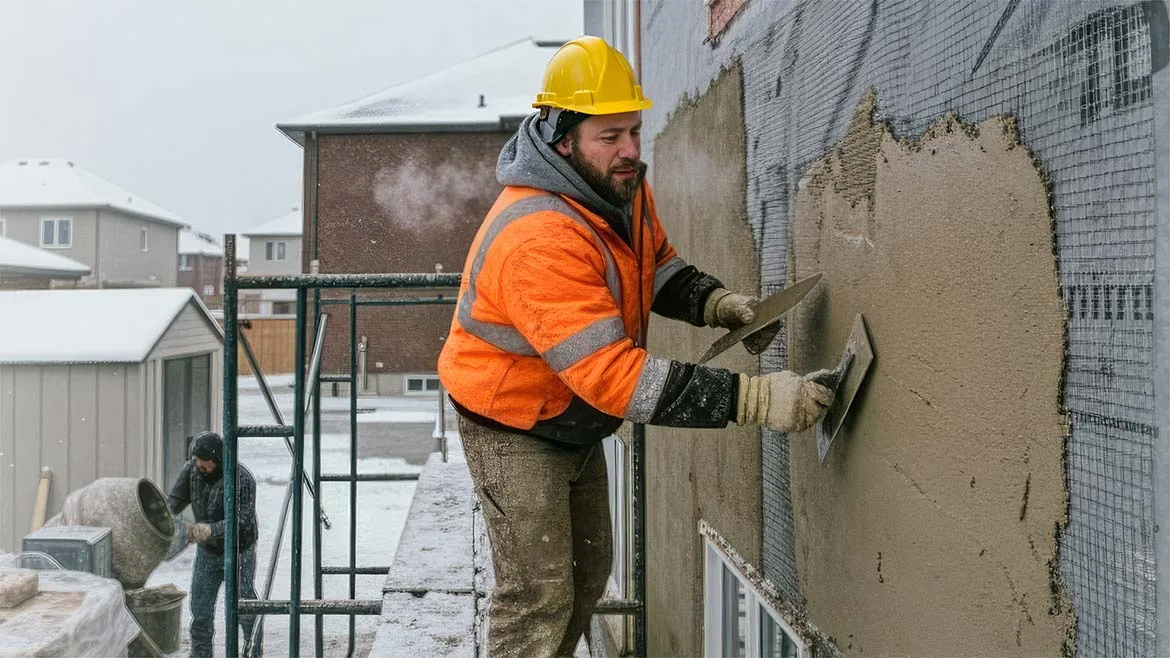
Many plaster and stucco repairs could be avoided if proper attention were given to conditions on the jobsite before the first trowel hits the wall. These cement-based mixes are hydraulic, meaning they rely on a specific chemical reaction triggered by water to set, harden and develop strength. Variations in temperature, moisture and sun exposure directly influence how hydration progresses. These conditions are rarely static. Extreme heat or cold can quickly disrupt typical seasonal patterns, rendering application methods that worked under one set of conditions ineffective under another.
As conditions change, materials can fall outside their optimal temperature and moisture range. When this occurs, plaster and stucco become more difficult to work with and less likely to achieve their expected properties. Success in extreme weather requires real-time adjustments to techniques, scheduling and curing practices. Ultimately, the long-term performance of plaster and stucco depends as much on material quality as on the contractor’s ability to manage adverse weather conditions effectively.
Understanding Cold-Weather Hydration Risks
In plaster and stucco work, cold weather is not defined by how it feels on the jobsite, but by temperatures low enough to slow or halt cement hydration. Guidance from the International Building Code and ACI recommends plaster should not be applied when ambient or substrate temperatures fall below 40 degrees Fahrenheit (4.4 degrees Celsius) unless protective measures are in place to maintain proper curing conditions. Additional precautions are necessary if temperatures reach 32 degrees Fahrenheit (0 degrees Celsius) or lower, as water in the mix can freeze and damage the material.
As temperatures approach 40 degrees Fahrenheit, set times lengthen and strength develops more slowly. Material applied under these conditions can crack, flake or soften, and may fail to bond properly if moisture is drawn from the surface before adequate strength develops. Floating and troweling also become more difficult, potentially disrupting production schedules. At this stage, the effects are irreversible and cannot be corrected through additional curing. When temperatures fall to 32 degrees Fahrenheit, hydration stops entirely. Frozen plaster or stucco can develop excessive porosity, making it highly susceptible to deterioration during subsequent freeze-thaw cycles. In extreme cases, the material can be removed from the wall with minimal effort.
Freeze-Thaw Cycling and Efflorescence Concerns
Temperature cycling during cooler months adds further stress to plaster and stucco installations. Substrates expand during warmer daytime periods and contract overnight as temperatures drop. This repeated movement can widen cracks and joints. In repair and restoration work, these effects are even more pronounced because patching materials have not yet reached full strength and are less capable of accommodating substrate movement.
Cold weather also heightens the risk of efflorescence. Slower evaporation allows moisture to migrate to the surface before dissipating, leaving soluble salts behind. Cooler days and nights often reveal deposits that are less visible under warmer conditions.
Best Practices for Cold-Weather Application
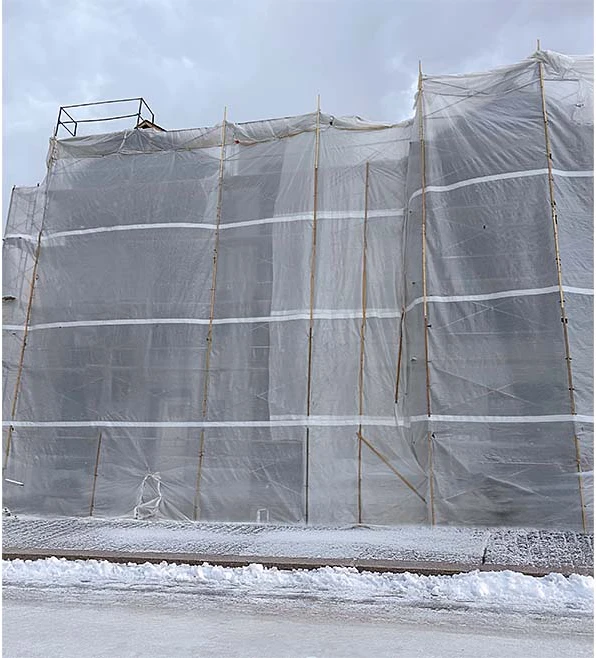
Photo: QUIKRETE
To protect plaster and stucco installations during cold weather, contractors should implement the following practices:
- Monitor temperatures. Do not apply plaster or stucco at ambient or substrate temperatures below 40 degrees F without proper preparation. Track temperatures throughout installation and curing.
- Avoid frozen surfaces. Never apply material to substrates that are frozen or approaching freezing.
- Store materials in a warm area. Keep all components, including water, at 45 degrees Fahrenheit (7.2 degrees Celsius) or higher when possible.
- Protect and ventilate the application area. Use tents or enclosures to shield work from wind, rain or snow while maintaining adequate ventilation for safety and proper air movement.
- Heat the application area. Run heating equipment before and after application to condition the environment. Avoid heaters that produce high combustion gases, which can accelerate carbonation and retard early set.
- Use preblended materials. Some brands offer preblended stucco mixes that provide consistent performance in cold conditions while eliminating the need to heat sand or manage frozen aggregates.
- Minimize shrinkage cracking. Install sufficient control and expansion joints in accordance with ASTM C1063, Standard Specification for Installation of Lathing and Furring and maintain adequate heat and moisture during curing until sufficient strength develops.
Understanding Hot-Weather Application Challenges
Where cold weather slows hydration, hot weather accelerates moisture loss and limits the time available for proper hydration and curing. Hot-weather conditions are typically defined as ambient temperatures above 100 degrees Fahrenheit (37.8 degrees Celsius), or 90 degrees Fahrenheit (32.2 degrees Celsius) when combined with wind speeds exceeding 8 mph (12.9 km/h). Even when air temperatures feel moderate, surfaces and materials can heat rapidly, causing plaster and stucco to stiffen sooner than expected and shortening the time available for placement and finishing. To counter rapid drying, ASTM C926, Standard Specification for Application of Portland Cement-Based Plaster, Section 7.8.1 recommends wetting the wall between successive coats to promote hydration and strength development.
Hot materials and substrates further intensify these challenges. Mixing water, sand and basecoat materials stored in direct sunlight can raise the temperature of the fresh mix before placement, reducing open time and increasing the risk of cold joints between placements. Hot, absorptive substrates can immediately pull moisture from the material after application, weakening the bond at the interface and increasing the likelihood of surface cracking. These combined effects require careful planning of material storage, staging and placement to maintain consistent working conditions.
Sun Exposure, Rapid Drying and Surface Defects
Sun exposure adds another layer of risk. Walls in direct sunlight can become significantly hotter than the surrounding air, accelerating evaporation and creating uneven curing across the surface. Differences in drying rates between shaded and sunlit areas can lead to color variation, cracking and reduced long-term durability. As heat and wind intensify, workability declines, and faster set times shorten the finishing window, making uniform thickness, texture and proper bond between coats more difficult. Rapid drying can also limit full hydration, compromising strength and contributing to cracking even when the material appears to set normally.
Best Practices for Hot-Weather Application
To protect plaster and stucco installations during hot weather, contractors should implement the following practices.
- Monitor temperatures. Avoid applying plaster or stucco at ambient temperatures above 100 degrees Fahrenheit without proper preparation. Track substrate and air temperatures throughout installation.
- Avoid hot surfaces. Do not apply material to surfaces exposed to direct sunlight. Allow surfaces to cool before starting work.
- Schedule strategically. Perform moisture-sensitive tasks during cooler periods, typically mornings and evenings.
- Limit sun exposure. Keep materials, tools and storage areas shaded to reduce heat absorption before and during placement.
- Use materials with high water retention. Preblended or custom-blended plaster and stucco products can help maintain hydration, workability and consistency.
- Optimize water use. Use cool water when mixing and wetting tools to prevent premature drying while maintaining consistency.
- Protect the application area. Employ tarps or temporary covers to shield the wall from sun, wind and uneven curing.
- Control spread rates. Avoid advancing ahead of finishing crews, as rapid stiffening can outpace leveling and rodding.
- Maintain moist curing. Wet surfaces between coats for several days after application to ensure proper hydration and strength development, as required by ASTM C926.
Planning and Protection Drive Long-Term Performance
Hot and cold weather present distinct challenges for plaster and stucco installation. Cold slows hydration, prolongs set times and increases the risk of cracking, delamination and efflorescence. Heat accelerates moisture loss, causes material to stiffen quickly and can lead to uneven curing and reduced strength. Understanding how temperature, sun exposure, wind and humidity influence the material allows contractors to plan effectively, adjust techniques and maintain proper curing.
By monitoring conditions, protecting surfaces and materials, and following appropriate strategies for extreme temperatures, contractors can help ensure plaster and stucco installations deliver consistent quality, structural performance and long-term durability. Proactive planning, precise moisture management and adherence to industry standards remain essential for success in any climate.Looking for a reprint of this article?
From high-res PDFs to custom plaques, order your copy today!