The Future of Stucco: Faster Installation, Better Energy Performance
Integrated wall systems are helping contractors meet energy code requirements, reduce labor demands and simplify stucco installation without sacrificing performance or aesthetics.
Key Takeaways
- Energy codes are driving a shift to continuous insulation (CI) systems. As building codes target thermal bridging and energy loss, stucco assemblies are evolving to incorporate continuous insulation that improves wall performance and helps meet increasingly stringent efficiency requirements.
- Labor shortages are accelerating adoption of integrated wall systems. Contractors are embracing ready-to-finish insulated panels that combine multiple components into a single product, reducing installation steps, shortening project schedules, lowering labor demands, and minimizing opportunities for installation errors.
- Modern integrated stucco systems deliver both performance and aesthetics. Factory-made insulated panels provide consistent quality, improved moisture protection, lighter weight, and compatibility with premium stucco finishes, allowing designers to achieve the traditional stucco look while improving energy efficiency and durability.
For decades, traditional three-coat stucco was the undisputed heavyweight of the exterior wall industry. It offered a timeless aesthetic, undeniable durability, and a sense of permanence that few other claddings could match. But the construction landscape of 2026 is vastly different from that of 20 or even ten years ago. Today, the “face” of the building is being reshaped by two unrelenting forces: increasingly stringent energy codes and a chronic shortage of skilled trade labor.
As architects and contractors look to balance the aesthetic demands of high-end stucco finishes with the functional requirements of the International Energy Conservation Code, the industry is shifting toward high-performance, integrated wall systems. The goal? To deliver continuous insulation without the traditional logistical headaches of multi-step assemblies.
The transition toward continuous insulation is no longer a matter of design preference, it is a regulatory mandate. Modern energy codes have identified thermal bridging—the process where heat bypasses insulation via studs and headers—as a primary culprit in building energy loss.
By wrapping the building in a “blanket” of CI, designers can eliminate these thermal bridges, drastically improving the R-value of the wall assembly. In the stucco market, this has traditionally meant adding layers: a water-resistive barrier, then rigid foam insulation, then lath, then a scratch coat, then a brown coat, and finally the finish. While effective from a thermal standpoint, these assemblies are labor-intensive and introduce multiple points of potential failure if not installed with precision.
The complexity of these multi-layered systems arrives at a time when the industry is facing its most significant challenge: a lack of "boots on the ground." The labor shortage has transitioned from a temporary hurdle to a permanent fixture of the construction economy. For stucco contractors, this means that every hour spent on a scaffold is a premium.
In this environment, productivity is the new currency. The market is moving away from sequential building—where one trade finishes a layer and another begins—and toward integrated solutions that condense the building schedule. This is where the next generation of building panels is making its mark.
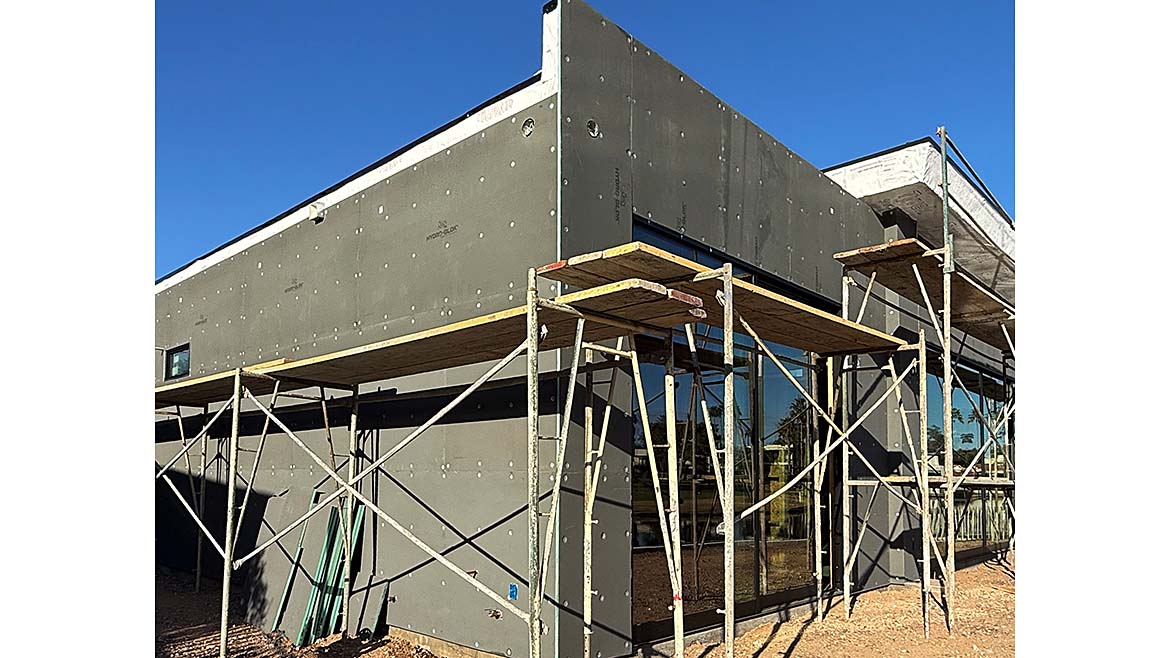
HB One CI Boards installed on a house in Prescott, Ariz.
Photo: Weatherization Partners Ltd.
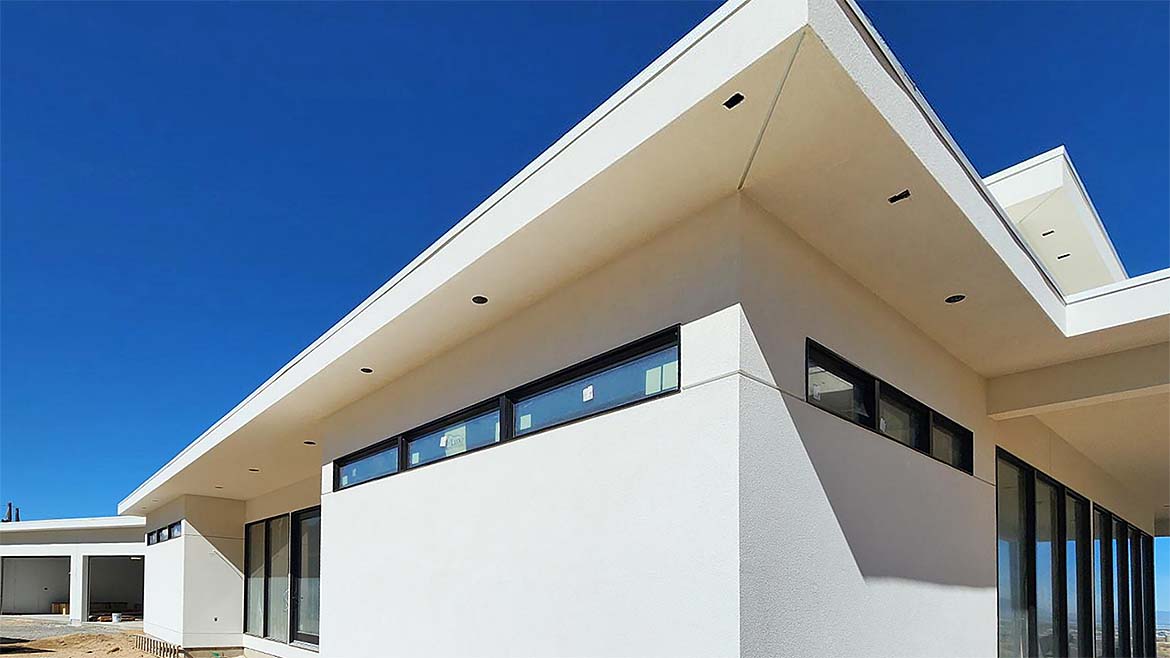
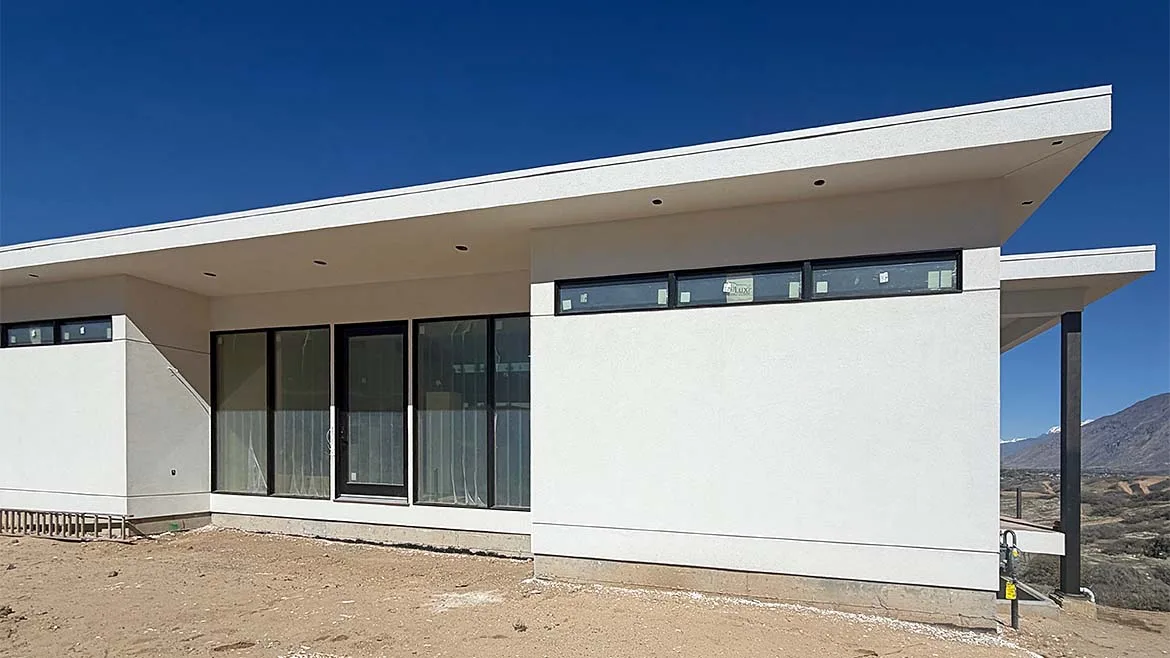
The CI Boards help create a flatter stucco finish
Photo: Weatherization Partners Ltd.
Simplifying the Assembly: The Rise of Integrated Boards
To combat the labor crisis, manufacturers are developing products that consolidate multiple steps of the exterior envelope into a single installation. A primary example of this trend is the emergence of high-performance substrate panels.
While many in the industry may recognize the brand from high-end interior waterproofing, their expansion into the building envelope highlights a broader market trend: the desire for a “ready-to-finish” surface. Some panels are engineered with a high-density, closed-cell extruded polystyrene (XPS) core can provide the necessary continuous insulation. However, the true innovation lies in the factory-applied, modified cementitious coating and integrated fiberglass mesh.
By utilizing a board that arrives on-site already coated and mesh-reinforced, contractors can effectively bypass the traditional lath and scratch-coat phases. For a project manager, this translates to fewer days on the schedule, reduced scaffolding rental costs, and a significant reduction in the physical toll on the crew. It transforms the exterior envelope from a multi-week masonry project into a streamlined panelized installation.
The shift toward these integrated systems isn't just about speed; it’s about risk mitigation. In traditional stucco applications, the management of moisture is paramount. A single error in lath attachment or a poorly mixed scratch coat can lead to cracking or water intrusion down the line.
Integrated systems offer a more predictable outcome. Because the skeleton of the stucco system is manufactured in a controlled factory environment, the thickness of the reinforcement and the quality of the bond are consistent across every square foot of the facade. These boards are inherently waterproof and vapor-retardant, providing an extra layer of defense behind the finish coat.
Furthermore, these panels are significantly lighter than traditional cement board or thick-bed stucco assemblies. This weight reduction simplifies handling on the jobsite and reduces the structural load on the building—a benefit that resonates from the structural engineer down to the laborer carrying the boards up a ladder.
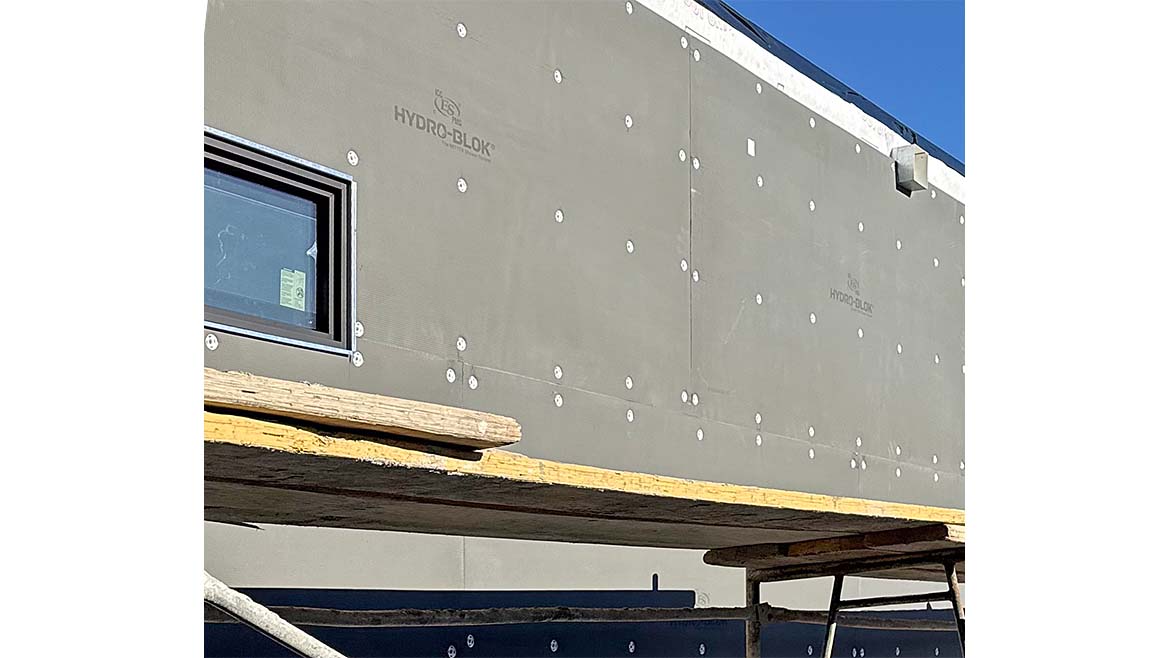
HydroBock CI is a water-resistant building system and lightweight cement board alternative for wall assemblies.
Photo: Weatherization Partners Ltd.
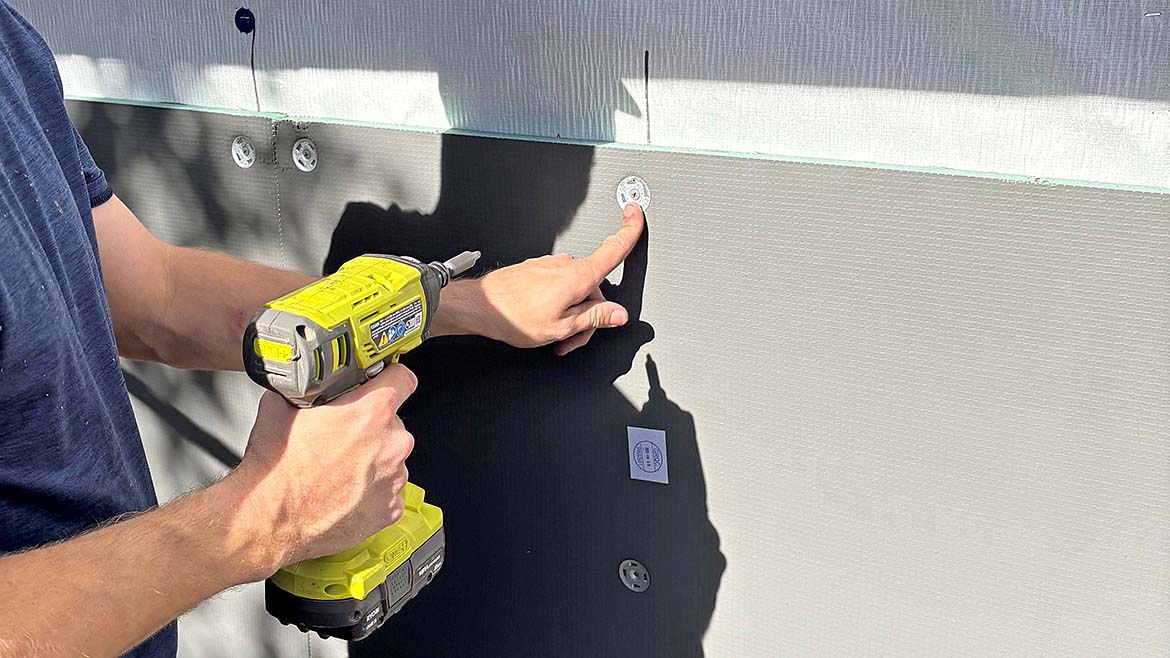
Installation of HydroBlok One.
Photo: Weatherization Partners Ltd.
The Look and Feel
One of the historical pushbacks against exterior cladding systems was the perceived loss of the authentic stucco feel. However, modern finishing techniques have bridged that gap. Because these integrated panels provide a stable, flat, and uniform substrate, they are the perfect canvas for the specialty finishes that are currently dominating the market.
From limestone and travertine mimics to ultra-smooth contemporary textures, the stability of the underlying CI board ensures that the finish remains vibrant and crack-free. Designers can now achieve the monolithic, heavy-masonry look of traditional stucco while benefiting from a wall system that is significantly more energy-efficient and faster to install.
As we look toward the end of the decade, the stucco industry's evolution will likely be defined by systemization. The days of sourcing lath from one manufacturer, foam from another, and finish from a third are fading. Contractors are increasingly looking for single-source warranties and assemblies that solve more than one problem at once.
The incorporation of some products into the stucco workflow represents a logical step in this evolution. It addresses the R-value requirements of the law, the durability requirements of the owner, and the efficiency requirements of the contractor.
In an era where time is the most expensive material on the jobsite, the ability to simplify the wall assembly isn’t just a convenience; it’s a competitive necessity. The stucco market of the future is lighter, faster, and warmer, ensuring that this classic aesthetic remains a staple of American architecture for generations to come.
Looking for a reprint of this article?
From high-res PDFs to custom plaques, order your copy today!