The U.S. Department of Energy last month released the latest version of the Zero Energy Ready Home requirements for single-family homes. Version 2 of the ZERH requirements included an update of the thermal envelope insulation levels to those required by the 2021 Residential IECC, whereas the previous version (V1 Rev 8) stipulated 2015 IECC thermal insulation requirements.
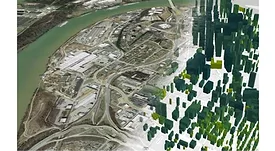
Bentley Systems has partnered with Oak Ridge National Laboratory’s Automatic Building Energy Modeling software suite, or AutoBEM. The software suite is being used in the architecture, city planning, real estate and home efficiency industries. Users take advantage of the suite’s energy modeling of almost all U.S. buildings.
The U.S. Department of Energy recently released the U.S. Energy Employment Report, an annual report that takes a comprehensive look at national and state-level employment data for the clean energy sector.
The DOE and Energy Star programs have all created awareness and inclusion of lower energy demand in the residential sector—but what about the non-residential sector?
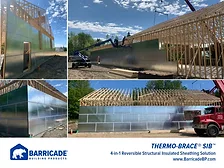
Visitors can learn about products to meet building codes in the South-Central states, including Barricade Plus House Wrap and Thermo-Brace Structural Sheathing.
The recently enacted Covid-19 relief package titled “Consolidated Appropriations Act, 2021” has extended the Federal Energy Tax Credit (Section 45L) through December 31, 2021, and made the Energy Efficient Commercial Building Deduction (Section 179D) permanent. While both tax incentives offer significant value and the qualification process is simple, they are often overlooked by developers and homebuilders.
While There May Be Alternative Means to Achieve Closure and Termination, Accessories Developed Specifically for CI Stucco Systems May Provide Simplified Solutions and Detailing.
If you’ve ever purchased ready-to-assemble furniture at IKEA or if you’ve put together toys on Christmas Eve you have been involved with prefabricated products.
When it was first drafted in 2000, the International Energy Conservation Code established a model code for states and municipal governments in the United States to set minimum design and construction requirements for energy efficiency.
As demand for exterior insulation wall systems continue, it is important to recognize
the popularity of this cladding is aided not only by a myriad of aesthetic options,
but also by the 'guts' of the system.