For nearly 40 years, Bob Drury has served the wall and ceiling community proudly through his position as executive director with the Northwest Wall and Ceiling Bureau. What readers may or may not know is that he also has close ties to Walls & Ceilings-his father-in-law ran the magazine decades ago.
Over the next three years, builders and contractors will witness an unprecedented rise in energy-efficient construction. Energy efficiency advocates succeeded in tightening the 2009 and 2012 International Energy Conservation Code with an estimated 30 percent improvement between the 2006 and 2012 versions of the code.
When a building leaks, the design, workmanship and material of the building envelope are all suspect. The exterior walls, roofing, windows, doors, balcony decks and below-grade waterproofing are all potential culprits. Oftentimes, however, a leak cannot be attributed to just one building envelope component.
As building materials and methods become better at sealing air leaks, the question arises, “How tight is too tight?” In terms of energy efficiency, one cannot build too tightly. Reducing air leakage is critical to lowering heating and cooling energy consumption.
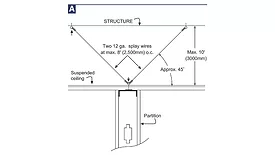
Q. On a recent project, we installed steel studs to the underside of the grid system for a suspended acoustical ceiling. I used screws to attach the runner track to the ceiling grid. I then installed my “kickers,” or permanent bracing to the structure above. I was then told to go back and remove all the temporary screws to allow the ceiling to float. Why?