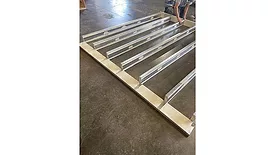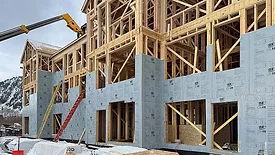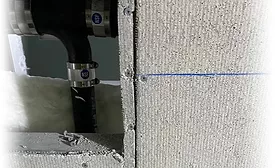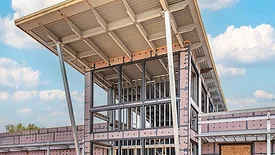
Once known primarily for fire resistance and durability, modern magnesium oxide (MgO) sheathing is now emerging as a reliable, system-level solution that improves thermal performance, reduces thermal bridging and supports today’s high-performance wall designs.
Magnesium oxide panels are drawing renewed interest as a durable, fire-resistant alternative to traditional board materials. Advances in manufacturing and performance are prompting contractors and designers to reconsider where MgO fits in modern wall assemblies.
As housing density increases, the construction industry must recognize acoustic comfort not as a luxury upgrade, but as a basic public-health and equity requirement for all residents.
Insulation expert Tom Harris explains why traditional R-value measurements fall short—and how the industry is working toward better ways to measure real-world insulation performance.
Why commercial buildings keep underperforming—and how continuous, integrated wall systems can finally align building physics, codes, and construction reality.
Contractors are pushed toward tighter, more energy-efficient building envelopes. making continuity in insulation, air sealing, and moisture control essential and increasing the importance of integrated materials like spray foam, structural sheathing, coatings, and sealants to meet rising performance standards.
Modern updates to the IECC 2024 and ASHRAE 90.1-2022 push contractors toward tighter, more energy-efficient building envelopes, making continuity in insulation, air sealing, and moisture control essential and increasing the importance of integrated materials like spray foam, structural sheathing, coatings, and sealants to meet rising performance standards.
Brick rainscreen systems offer a more energy-efficient, airtight, and sustainable alternative to traditional brick veneer, enabling modern buildings to meet ASHRAE, Passive House, and LEED performance standards.
Advancements in flashing materials—particularly clear acrylic and liquid flashings—are transforming building envelope performance by improving moisture protection, inspection efficiency, and installation speed, helping contractors meet stricter codes and tighter project timelines with greater durability and precision.
In its new report, the IEA indicates that buildings remain the largest CO₂ emitters and calls for stronger building codes, greater retrofit spending, and wider use of digital optimization. Energy efficiency specialists say these steps only pay off when building systems are steered by AI that can react in real time.
The importance of strict compliance with ANSI standards and manufacturer guidelines during cementitious backer unit (CBU) installation, highlighting that meticulous framing, fastening, and especially proper joint treatment are essential for achieving durable, high-quality wall systems in construction projects.