Alternative Project Delivery and LEED
Choosing the right project delivery method to use for the design and construction of a building can be difficult, especially when the requirement for a green building certification is thrown into the mix.
Choosing the right project delivery method to use for the design and construction of a building can be difficult, especially when the requirement for a green building certification is thrown into the mix. In addition to the standard design-bid-build method most commonly employed, owners have other types to choose from, each offering a different set of characteristics that must be carefully evaluated against the goals of the project. Design-negotiate-bid, design-build, owner-build, construction management, and the newly emergent integrated project delivery are among delivery methods available to owners and project teams to select. How do these various delivery methods work when teams are faced with the additional challenge of obtaining a green building certification?
This article examines two projects, each of them pursuing LEED certification, and each of them using an alternative project delivery method.
The design team elected to take on all responsibility for managing the LEED documentation process instead of employing the service of a third party facilitator. This allowed the team to save money and to be more proactive during design and construction to ensure that points being pursued were never in jeopardy of being lost. The project was awarded a LEED CI Silver certification in February 2009, with a total of 30 points.
Below are a few of the more notable LEED CI points awarded for the project:
Alternative Transportation, Bicycle Storage & Changing Rooms Credit SS.3.2: Provided innovative wall mounted bike storage which became a design feature in the space. Provided dedicated shower/changing room for bike commuters.
 Water
Use Reduction Credit WE.1.1-1.2: Reduced plumbing fixture water consumption by
34.5 percent.
Water
Use Reduction Credit WE.1.1-1.2: Reduced plumbing fixture water consumption by
34.5 percent.
Optimized Energy Performance, Equipment & Appliances Credit EA.1.4: Furnished 97 percent of appliances and equipment with Energy Star label.
Tenant Space, Long Term Commitment Credit MR.1.1: NBBJ signed a lease for a minimum of 10 years.
Certified Wood Credit MR.7: FSC certification for 55.5 percent of wood-based materials and furniture.
Outside Air Delivery Monitoring Credit EQ.1: CO² sensors were provided to warn occupants in event of rising CO² levels and providing alternate means of ventilating space with operable windows.
Low-emitting Materials, Carpet Systems Credit EQ.4.3: All carpet systems comply with CRI Green Label Plus requirements and adhesives within strict VOC limits.
Daylight & Views:
Daylighting Credit EQ.8.1-8.2: Provided daylight into 94 percent of all regularly occupied spaces.
Views for 90 percent of Spaces Credit EQ.8.3: Provided views to outside from 98.9 percent of all regularly occupied seated spaces.
The team elected to pursue an alternative LEED certification track in which Design and Construction points were submitted at different times during the process. In this scenario, Design credits identified by LEED were submitted prior to the beginning of construction. All 12 LEED design points were awarded to the project by the USGBC before construction began. The remaining Construction points being pursued have been submitted, and are currently being reviewed by the USGBC accreditation body, for an anticipated LEED Gold certification.
Using an integrated project delivery method allowed the team to more accurately predict associated costs for green building strategies and systems. This resulted in a more accurate prediction of the team’s success at being awarded LEED points being pursued. It also allowed the team to make decisions about which sustainable systems and strategies to pursue and incorporate more quickly and with more confidence as the project developed, as illustrated in the following examples:
Green Roof: The original cost estimate could not accommodate a green roof, but through constructability and value analyses conducted throughout the process, a hallmark of the IPD process, money saved in other areas was able to be transferred to a green building “wish list,” resulting in 3,000 square feet of green roof added to the project.
Brise Soleil: The original design of the building included a brise soleil that was in danger of being eliminated because of excessive cost. Through collaboration among the architect and contractor, the design was re-evaluated and alternative fabrication techniques were identified that brought the cost to within an acceptable range. The brise soleil was shown in energy modeling to reduce energy consumption of the building by 6 percent. The IPD process provided the framework needed to effectively work the problem resulting in the retention of the brise soleil and increasing the energy efficiency of the building.
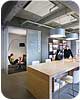
Simple
expression of materials and systems resulted in exposed structure and
mechanical systems and a polished concrete floor. Acoustical ceiling panels
stick-pinned to the concrete ceiling at strategic locations provides a clever
solution to improved acoustics and light reflectance within the space. Photo by
Francis Dzikowski
Choosing the right project delivery method to use for the design and construction of a building can be difficult, especially when the requirement for a green building certification is thrown into the mix. In addition to the standard design-bid-build method most commonly employed, owners have other types to choose from, each offering a different set of characteristics that must be carefully evaluated against the goals of the project. Design-negotiate-bid, design-build, owner-build, construction management, and the newly emergent integrated project delivery are among delivery methods available to owners and project teams to select. How do these various delivery methods work when teams are faced with the additional challenge of obtaining a green building certification?
This article examines two projects, each of them pursuing LEED certification, and each of them using an alternative project delivery method.
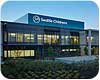
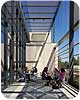
Seattle
Children’s Hospital in Bellevue,
Wash., built using an Integrated
Project Delivery method is on track for a LEED Gold rating. Photo by Benjamin
Benschneider
Fast-Tracked LEED: 2 Rector Street Tenant Improvement
In May 2008, the international architecture and design firm NBBJ signed a lease for 16,000 square feet of office space for its growing New York City office. Upon selecting the downtown location, NBBJ spent five months creating a new interior space that would accommodate its immediate and future needs while simultaneously adhering to its sustainable design principles, which included a LEED CI V2.0 Silver minimum certification. The project delivery method chosen was design-negotiate-build. Lean design and fast tracked techniques were employed to allow the team to meet its aggressive schedule; less than six months from design to occupancy. A simple expression of materials and systems resulted in a clean aesthetic that merged perfectly with the design’s sustainable design strategies.The design team elected to take on all responsibility for managing the LEED documentation process instead of employing the service of a third party facilitator. This allowed the team to save money and to be more proactive during design and construction to ensure that points being pursued were never in jeopardy of being lost. The project was awarded a LEED CI Silver certification in February 2009, with a total of 30 points.
Below are a few of the more notable LEED CI points awarded for the project:
Alternative Transportation, Bicycle Storage & Changing Rooms Credit SS.3.2: Provided innovative wall mounted bike storage which became a design feature in the space. Provided dedicated shower/changing room for bike commuters.
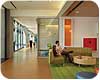
Low
VOC interior paint and CRI Green Label Plus carpet and adhesive contribute to
the available Indoor Environmental Quality points. The acoustical wood ceiling
panels are made with FSC certified wood products, and contribute toward the
certified wood points. Photographer/Artist: Benjamin Benschneider
Optimized Energy Performance, Equipment & Appliances Credit EA.1.4: Furnished 97 percent of appliances and equipment with Energy Star label.
Tenant Space, Long Term Commitment Credit MR.1.1: NBBJ signed a lease for a minimum of 10 years.
Certified Wood Credit MR.7: FSC certification for 55.5 percent of wood-based materials and furniture.
Outside Air Delivery Monitoring Credit EQ.1: CO² sensors were provided to warn occupants in event of rising CO² levels and providing alternate means of ventilating space with operable windows.
Low-emitting Materials, Carpet Systems Credit EQ.4.3: All carpet systems comply with CRI Green Label Plus requirements and adhesives within strict VOC limits.
Daylight & Views:
Daylighting Credit EQ.8.1-8.2: Provided daylight into 94 percent of all regularly occupied spaces.
Views for 90 percent of Spaces Credit EQ.8.3: Provided views to outside from 98.9 percent of all regularly occupied seated spaces.
High
performance curtainwall with insulating, low-e coated glazing units combined
with a brise soleil helped the building achieve its goals for energy
efficiency. Photo by Benjamin Benschneider
LEED and Integrated Project Delivery: Seattle Children's Hospital, Bellevue, Wash.
Hospitals are complex buildings requiring lengthy periods of time for planning, design, and construction. The Seattle Children’s Hospital Bellevue design team opted for a less traditional delivery method based on integrated project delivery philosophies. An integrated form of agreement was signed between the owner, architect, and contractor that equally assigned responsibility among the parties, and required highly collaborative interaction through planning, design and construction. Although not originally required by the owner, a LEED certification was pursued and tracked by the design team during the process ultimately implemented once its likelihood of success was proven by the design team.The team elected to pursue an alternative LEED certification track in which Design and Construction points were submitted at different times during the process. In this scenario, Design credits identified by LEED were submitted prior to the beginning of construction. All 12 LEED design points were awarded to the project by the USGBC before construction began. The remaining Construction points being pursued have been submitted, and are currently being reviewed by the USGBC accreditation body, for an anticipated LEED Gold certification.
Using an integrated project delivery method allowed the team to more accurately predict associated costs for green building strategies and systems. This resulted in a more accurate prediction of the team’s success at being awarded LEED points being pursued. It also allowed the team to make decisions about which sustainable systems and strategies to pursue and incorporate more quickly and with more confidence as the project developed, as illustrated in the following examples:
Green Roof: The original cost estimate could not accommodate a green roof, but through constructability and value analyses conducted throughout the process, a hallmark of the IPD process, money saved in other areas was able to be transferred to a green building “wish list,” resulting in 3,000 square feet of green roof added to the project.
Brise Soleil: The original design of the building included a brise soleil that was in danger of being eliminated because of excessive cost. Through collaboration among the architect and contractor, the design was re-evaluated and alternative fabrication techniques were identified that brought the cost to within an acceptable range. The brise soleil was shown in energy modeling to reduce energy consumption of the building by 6 percent. The IPD process provided the framework needed to effectively work the problem resulting in the retention of the brise soleil and increasing the energy efficiency of the building.
Conclusion
Alternative project delivery methods for buildings can improve successful incorporation of green building strategies over a more traditional design-bid-build method. In the case studies examined in this article, fast-tracked and integrated project delivery methods worked in favor of maximizing each project’s sustainability, and acquiring LEED rating system points. Greater collaboration among team members leads to better communication, willingness to share great ideas in pursuit of brilliant solutions and an honest accounting of construction dollars.Looking for a reprint of this article?
From high-res PDFs to custom plaques, order your copy today!