Dear Anna
Dear Anna: 6 Marketing Metrics Every Roofing Contractor Needs
Track the six marketing metrics that improve lead quality, sales, and long-term roofing growth.
Marketing data has never been more accessible. Contractors can log into dashboards and instantly see website visits, social media followers, impressions, and engagement statistics. While these numbers may look impressive, they don't always reflect what's happening where it matters most—inside the business.
On a recent episode of “If Walls Could Talk,” Jill Bloom, Executive Director of Walls & Ceilings, spoke with Anna Anderson, CEO of A Squared, to discuss why contractors need to shift their focus from vanity metrics to business metrics that directly influence growth and profitability.

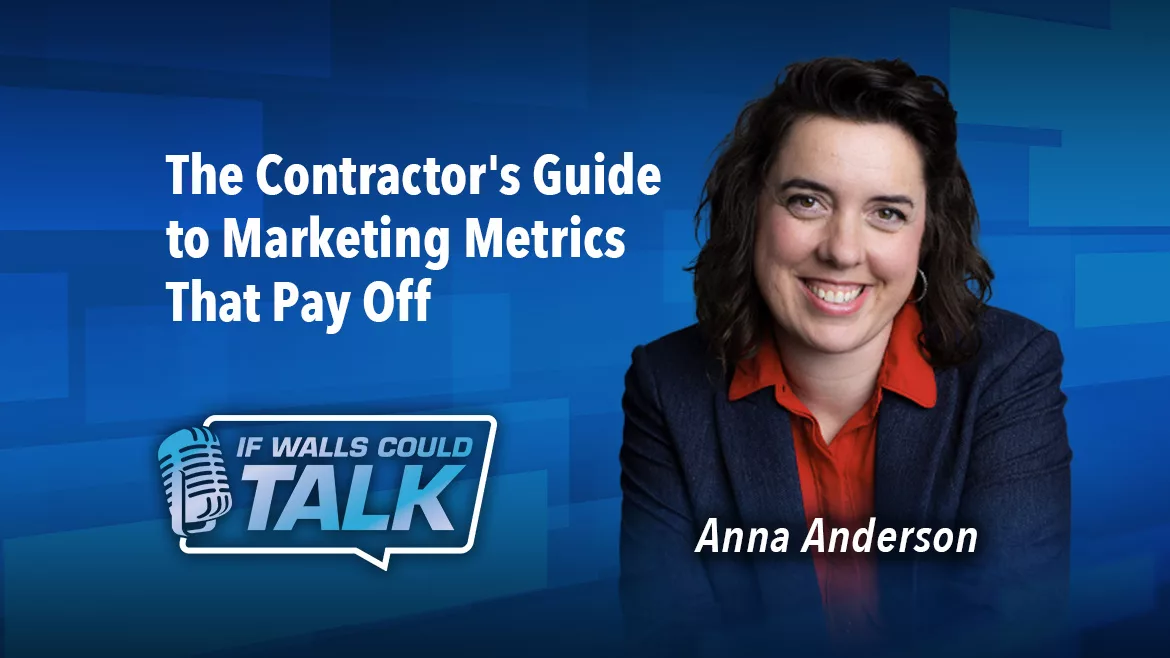
The Contractor's Guide to Marketing Metrics That Pay Off
Marketing metrics like website traffic and social media growth may look impressive, but they don't always drive business results. In this episode, Anna Anderson, CEO of A Squared, explains the six key performance indicators every roofing contractor should track to generate better leads, improve marketing ROI, and build long-term growth.
According to Anderson, many companies fall into the trap of evaluating marketing success based on numbers that are easy to measure but difficult to monetize. Website traffic, for example, has traditionally been viewed as a key indicator of digital marketing success. However, as artificial intelligence increasingly answers customer questions directly within search platforms, users may never visit a company's website at all. That doesn't necessarily mean marketing is underperforming—it means businesses need to rethink what success looks like.
Instead of chasing clicks and impressions, Anderson recommends focusing on six metrics that provide a much clearer picture of marketing effectiveness.
The first is qualified leads. Every contractor should establish what defines a quality opportunity, whether that's project type, geographic service area, or customer intent. Once that definition exists, marketing efforts can be evaluated based on attracting the right prospects rather than simply increasing lead volume.
The second metric is understanding where those leads originate. Whether opportunities come from search engines, referrals, paid advertising, social media, or other channels, knowing the source allows contractors to invest more confidently in the marketing activities that consistently produce results.
Cost per lead remains another critical measurement. Tracking marketing spend against qualified opportunities helps determine whether campaigns are becoming more efficient over time and provides early warning signs when adjustments are needed.
For specialty contractors, referrals continue to represent one of the strongest indicators of business health. A growing referral pipeline demonstrates customer satisfaction while often delivering higher-quality opportunities at a lower acquisition cost than paid advertising.
Equally important is customer retention. Anderson shared that one contractor discovered its repeat customer numbers had declined significantly over several years. Because the company had been tracking retention, leadership recognized the problem early and could begin developing strategies to rebuild long-term customer relationships. Without that data, the issue may have gone unnoticed.
The final metric focuses on customer responsiveness. Today's buyers expect timely communication, whether they're submitting an online form or making a phone call. Fast response times not only improve customer experience but also increase the likelihood of converting inquiries into projects.
Anderson also encouraged contractors to avoid reacting too quickly when lead numbers fluctuate. Seasonal changes, holidays, market conditions, and digital platform updates can all temporarily influence performance. Comparing current results with historical trends often provides better context than evaluating a single week's activity.
For contractors navigating an increasingly digital marketplace, the takeaway is straightforward: marketing success isn't measured by how many people see your business—it's measured by how many qualified opportunities become satisfied customers. By focusing on meaningful performance indicators instead of vanity metrics, wall and ceiling contractors can make smarter decisions, improve marketing efficiency, and build a stronger foundation for long-term growth.
This article is based on the discussion between Jill Bloom and Anna Anderson about shifting from vanity metrics to measurable business outcomes, including qualified leads, lead sources, cost per lead, referrals, customer retention, and responsiveness.
Looking for a reprint of this article?
From high-res PDFs to custom plaques, order your copy today!

Anna Anderson is the visionary CEO of Art Unlimited, a leading marketing agency that specializes in digital and traditional marketing services. With years of experience in the marketing industry, Anna has become a well-known expert in roofing marketing services, having helped numerous companies increase their online presence and boost their bottom line.




Jill Bloom is the innovative Executive Director of Roofing Contractor, Walls & Ceilings, Building Enclosure, Roofing Supply Pro, and the highly regarded Best of Success event. With a deep commitment to advancing the roofing, construction, and building enclosure industries, Jill oversees a robust portfolio of publications, podcasts, and events that empower professionals with knowledge, inspiration, and connections.
Her brands deliver exceptional value across multiple platforms, including:
- Techos y Más, the Spanish-language newsletter of Roofing Contractor.
- Safety Advisor, a newsletter focused on critical resources for jobsite safety.
- Thermal Talk, a newsletter focused on insights and news for the insulation contractor.
- eRock, a leading newsletter for drywall contractors.
- The Enclosure Experts podcast, offering architects deep insights into building enclosure technologies.
- If Walls Could Talk, a podcast dedicated to exploring trends and innovations for the wall and ceiling contractor.
- The Best of Success Podcast, providing thought leadership and practical advice for roofing professionals.
Jill’s passion for professional development and fostering industry connections is exemplified by the Best of Success event, a premier gathering of contractors, suppliers, and thought leaders for unmatched education and networking.