On the Job
Oakland Nursery Retrofit Highlights the Value of SPF
An Oakland, Calif., project demonstrates how careful planning, quality installation and high-performance spray foam systems can improve building efficiency in existing facilities.
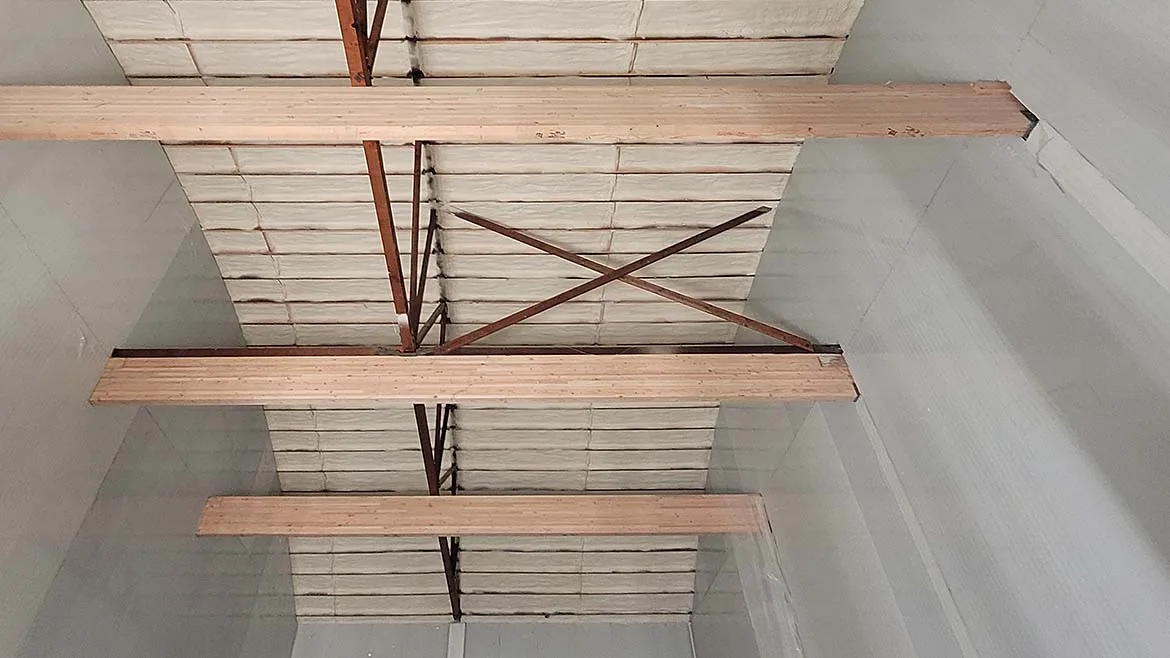
A retrofit plant nursery project in Oakland, Calif., is demonstrating how spray polyurethane foam insulation can improve environmental control and energy performance in aging commercial facilities. Working under general contractor HML Builders, Insul-Techs installed closed-cell SPF across all ceiling assemblies to create a continuous thermal and air barrier within the existing structure.
The project reflects many of the challenges facing insulation contractors today, including retrofit complexity, building-performance requirements and the need for precise installation practices. For facilities such as plant nurseries, maintaining stable temperature and humidity levels is critical to daily operations, making building-envelope performance a top priority.
Project Snapshot
Project: Retrofit Plant Nursery – Oakland, California
General Contractor: HML Builders
Insulation Contractor: Insul-Techs
Scope of Work: Installation of closed-cell spray polyurethane foam across all ceiling assemblies.
Design Objective: To achieve an airtight, impermeable, high-thermal-performance ceiling system that would significantly improve environmental control and overall building efficiency.
Manufacturers and Products Used: Owens Corning Natural Polymers Ultra-Pure spray foam insulation.
The retrofit focused on addressing one of the most common issues in older agricultural and industrial buildings: uncontrolled air movement and inconsistent thermal performance. Fluctuations in temperature and humidity can affect growing conditions, equipment efficiency and operating costs. By sealing the ceiling assemblies with closed-cell SPF, the project team sought to create a more airtight and impermeable building envelope capable of supporting year-round environmental stability.
Crews installed Owens Corning Natural Polymers Ultra-Pure spray foam insulation throughout the overhead assemblies. Closed-cell SPF was selected for its ability to combine insulation, air sealing and moisture resistance in a single application. In retrofit environments, this can simplify installation around penetrations, structural elements and existing mechanical systems while helping improve overall assembly performance.
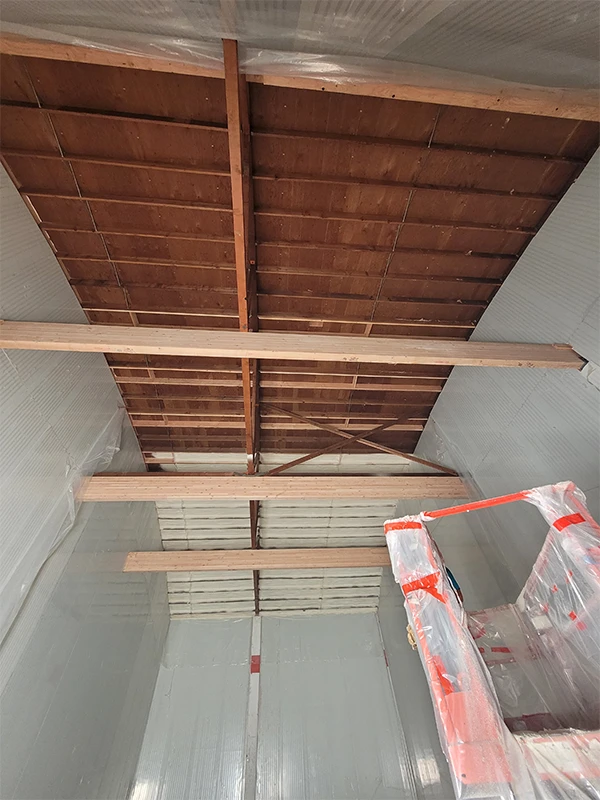
Before: Ceiling assemblies before retrofit work began. Uninsulated areas and potential air leakage pathways can contribute to energy loss and inconsistent interior conditions.
Photo: Insul-Techs Inc.
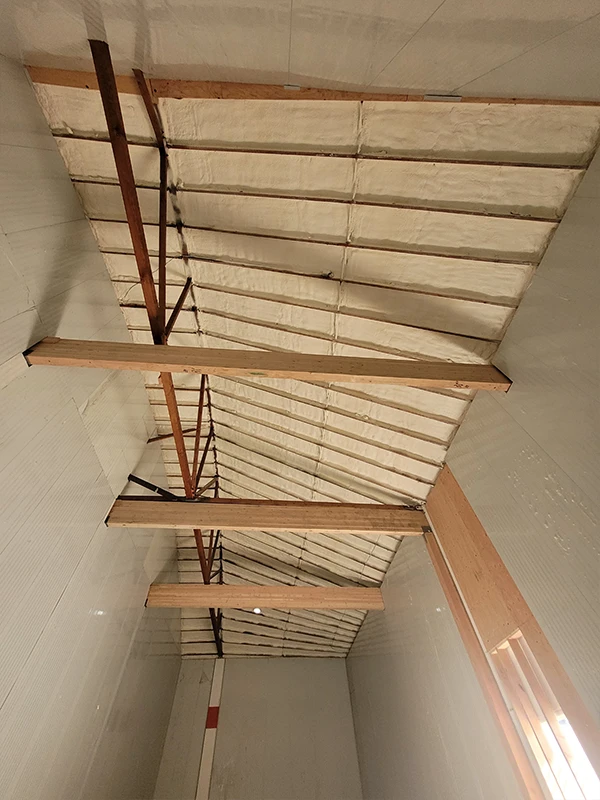
After: Insul-Techs installed closed-cell SPF throughout the overhead assemblies, creating an airtight, high-performance ceiling system that supports improved thermal efficiency and moisture management.
Photo: Insul-Techs Inc.
The project also underscores the growing role of spray foam technologies in renovation and retrofit work. Existing facilities often experience significant energy losses through poorly insulated ceiling assemblies, air leakage pathways and thermal discontinuities. Applying SPF directly to the substrate can improve thermal continuity, reduce uncontrolled air infiltration and help mitigate condensation concerns.
For Insul-Techs, the project served as an example of how disciplined installation practices and product selection contribute to long-term building performance. Consistent application thickness, proper substrate preparation and adherence to manufacturer specifications were critical to achieving the project's energy-efficiency goals.
As demand for high-performance building envelopes continues to grow, projects like the Oakland nursery retrofit illustrate how insulation contractors are helping owners improve facility performance, reduce energy consumption and extend the useful life of existing buildings.
Looking for a reprint of this article?
From high-res PDFs to custom plaques, order your copy today!