Decarbonization Fundamentals
THE PIVOTAL ROLE OF ENERGY EFFICIENCY VIA HIGH-PERFORMANCE INSULATION IN THE DECARBONIZATION OF BUILDINGS.

With numerous sources of data pointing to a warming planet, there is little doubt climate change is real and that it is progressing rapidly. Most global climate scientists agree the main cause is human expansion of the greenhouse effect, the warming that occurs when the atmosphere traps heat radiating from Earth toward space. The planet’s warming has led to numerous hurricanes, droughts, tsunamis, ocean acidification, and the decline of non-human species, all valid reasons to reduce emissions and the greenhouse effect.
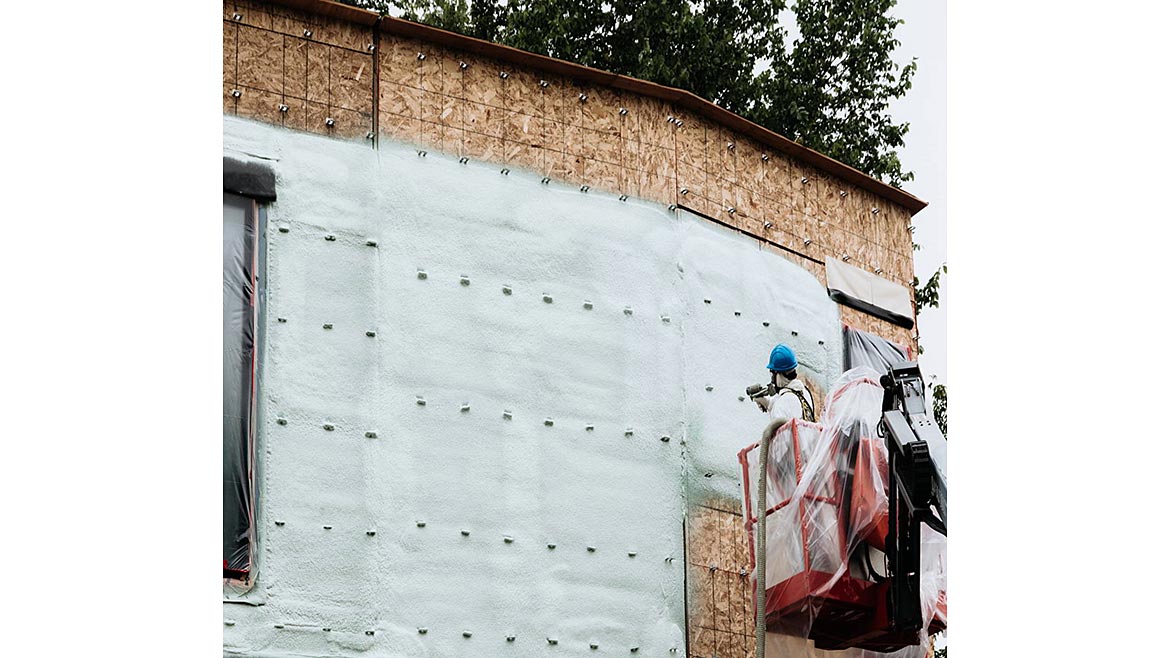
The scientific community identifies the primary cause of human-induced greenhouse gas emissions as fossil fuel burning. A leading cause of fossil fuel use is buildings, thus the decarbonization of buildings is fundamental to the future health of the planet. Luckily, there are available solutions, including the application of high-performance insulations such as spray polyurethane foam in the building envelope.
Consequences of a Warming Earth
2020 was the second warmest year on record for the globe. The year’s economic recession, instigated by the COVID-19 pandemic, likely reduced carbon emissions by about 7 percent. However, without the slowdown, the 2020 temperature increase would have been the highest on record, according to Pieter Tans of NOAA’s Global Monitoring Laboratory.
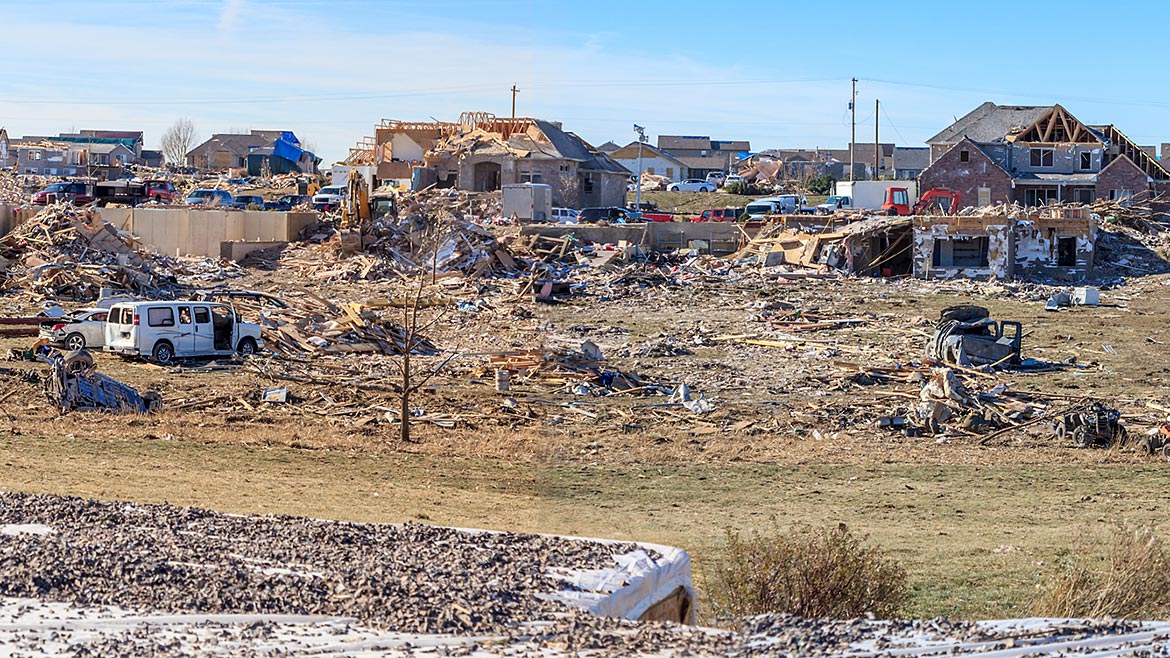
Extreme consequences of warming are visible. The 2017 Atlantic Hurricane Season brought Hurricane Maria’s decimation of Puerto Rico; Maria and Irma’s damage in the Virgin Islands; and Hurricane Harvey’s destruction over Texas, Louisiana and the Tennessee and Ohio Valleys. In 2019, Hurricane Dorian became the worst natural disaster to strike the Bahamas. August 2021’s Hurricane Ida left over one million people in Louisiana without power before bringing catastrophic rainfall to the northeastern United States, creating casualties across numerous states, flooding New York City’s subway system and halting air travel.
In 2018, California Camp and Woolsey fires burned more than a quarter million acres, destroying the town of Paradise, claiming 89 lives. The state recorded its first giga-fire in October 2020 when the August Complex fire scorched over one million acres. August 2021’s Dixie fire became the largest single fire in the state’s history. Simultaneously, the Caldor Fire burned through thousands of acres of forest in California’s Sierra Nevada.
Buildings’ Emissions Contributions
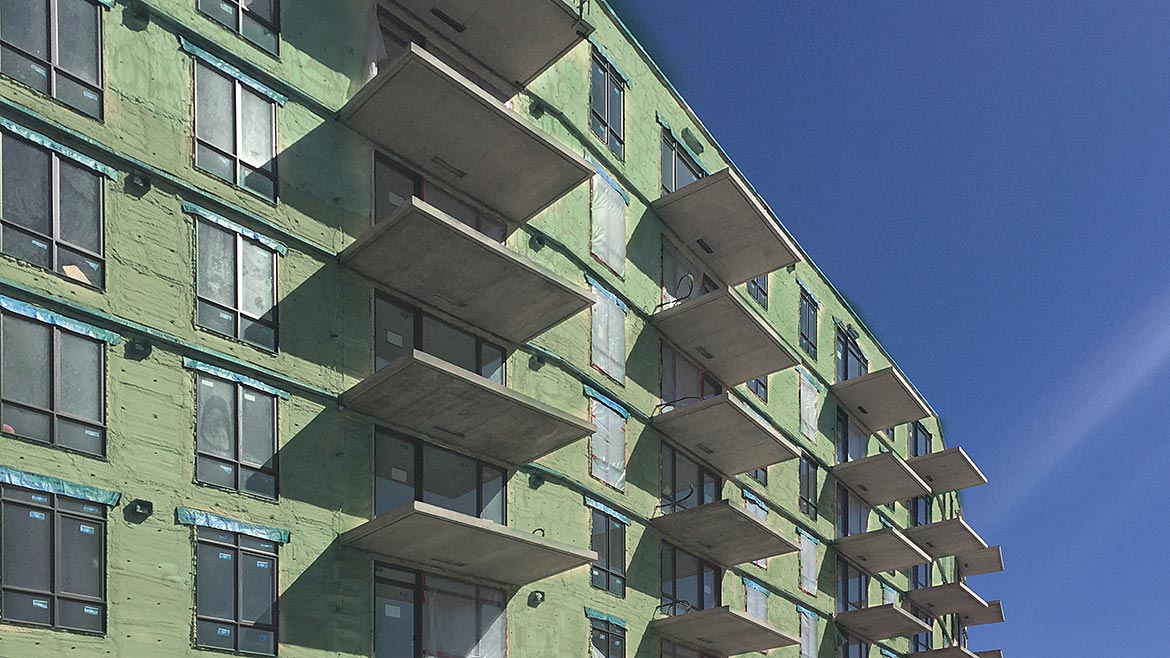
C2ES’s 2018 Decarbonizing U.S. Buildings report finds that fossil fuel combustion attributed to buildings accounts for roughly 29 percent of total U.S. greenhouse gas emissions. The Deep Decarbonization of New Buildings (2018) report found buildings use approximately 40 percent of energy produced in the U.S. and are responsible for about 30 percent of the nation’s carbon dioxide emissions. These findings demonstrate an alarming trend and assert a need for the building sector to address and employ more environmentally responsible building and building use practices.
Energy Efficiency and the Building Envelope
The C2ES report indicates that improvements in energy efficiency have led to emissions reductions in the residential and commercial real estate sectors of 17.3 and 11.4 percent, respectively, since a 2005 peak, pointing to energy efficiency as a key driver in the effort to decarbonize buildings.
When looking at meaningful ways to conserve energy in structures, the building envelope takes center stage. Optimal insulation of the envelope is key for preventing energy transfer, reducing energy consumption attributed to heating and cooling the structure, and reducing emissions. However, not all insulations perform equally well. R-value measures the ability to limit conductive heat flow. However, conductive heat flow is only one heat transfer mechanism. Air leakage or heat transfer via convection is also important to regulate. Controlling air leakage in a building can result in up to a 25 percent reduction in space conditioning energy usage, something not possible using insulations that only address conduction heat flow reduction. Ultimately, an air-tight seal is as important as R-value in achieving energy efficiency and reducing fossil fuel driven emissions.
Closed Cell Spray Polyurethane Foam
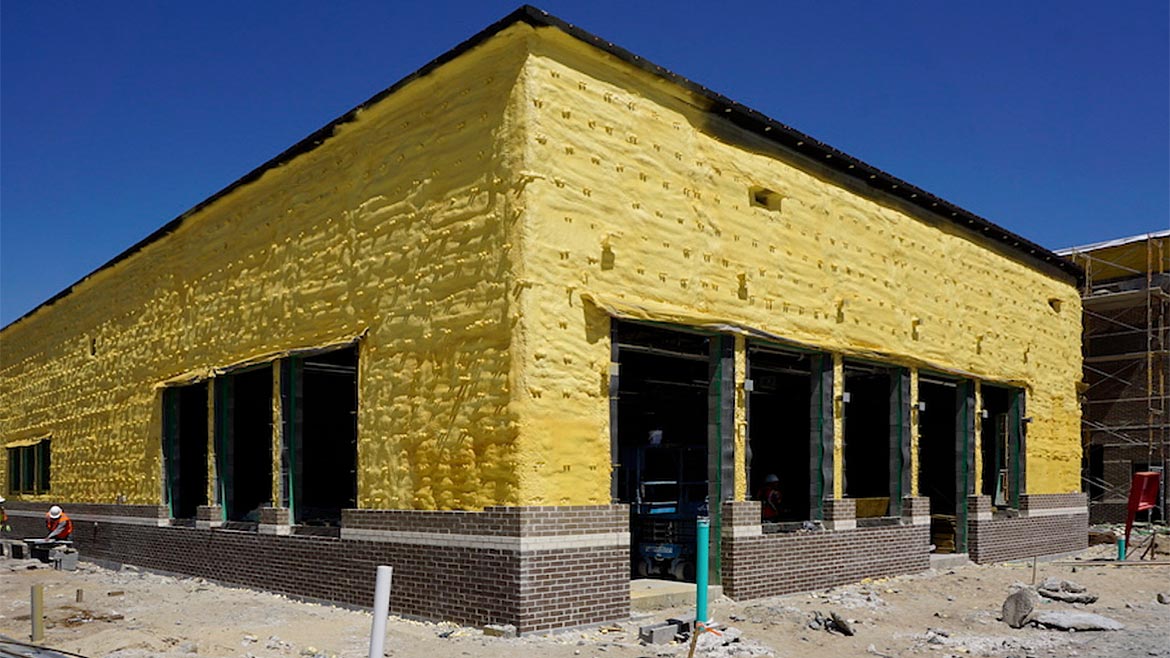
One of the highest performing insulation options available today, medium-density closed-cell spray foam insulation performs remarkably well as a single-source solution for thermal, air, vapor and water control. As a thermal insulator, closed cell SPF boasts one of the highest R-values per inch of all insulation options. The material forms in-place and fully adheres, virtually eliminating cracks and gaps that leak air or water, creating an airtight structure.
Closed cell SPF insulation protects the structure against mold and water damage, maintains indoor temperatures, improves indoor air quality and dramatically reduces energy costs. The resulting high-performance envelope offers greater comfort and significantly reduces long-term heating and cooling demands, emissions and energy costs. In fact, in accordance with one product’s EPD, closed cell SPF reduces embodied carbon when compared to other types of insulation and is also much more effective in reducing buildings’ operational carbon emissions.
Argument for Closed Cell Spray Foam in Continuous Insulation Applications
Generally speaking, a building will perform better in the area of energy efficiency with the application of continuous insulation on the exterior of side of the building envelope walls, when compared to the same structure without it. Closed-cell spray foam (SPF) is ideally suited for continuous insulation applications and can be used in both interior and exterior applications. It is also ideally utilized in smaller spaces where a higher R-value is required or where severe moisture could be an issue.
Combining closed-cell spray polyurethane foam as continuous insulation on the exterior of the walls, along with the application of spray foam insulation in the stud cavities, creates a building envelope which mirrors a coat (continuous insulation) and a sweater (cavity insulation) acting in concert, and further optimizes the energy efficiency of the total building envelope.
Additional Solutions
Of course, to achieve meaningful emissions reductions in buildings, new structures must be designed and built with high performance materials, while existing structures must be addressed through retrofits. Additional efforts that will help push the needle toward decarbonization of buildings include: a continued push toward electrification, stringent building codes, support for climate change policies, greater efficiency of the mechanical equipment in buildings, more financial and tax incentives, wider adoption of energy monitoring technologies, and, ultimately, better education of builders, contractors and consumers.
References
Intergovernmental Panel on Climate Change (IPCC), Climate Change 2014 Synthesis Report Summary for Policymakers, https://www.ipcc.ch/site/assets/uploads/2018/02/AR5_SYR_FINAL_SPM.pdf
NOAA Research News, Despite Pandemic Shutdowns, Carbon Dioxide and Methane Surged in 2020, April 7, 2021, https://research.noaa.gov/article/ArtMID/587/ArticleID/2742/Despite-pandemic-shutdowns-carbon-dioxide-and-methane-surged-in-2020
BBC News, Hurricane Ida: One Million People in Louisiana Without Power, August 31, 2021, https://www.bbc.com/news/world-us-canada-58378788
NPR, Ida Brings Historic Flooding to Northeast, Kills at Least 18 People Across 4 States, September 2, 2021, https://www.npr.org/2021/09/02/1033513900/historic-flooding-hurricane-ida-new-york
Washington Post, Mapping the Camp and Woolsey Fires in California, November 25, 2018, https://www.washingtonpost.com/graphics/2018/national/california-wildfires-maps/
CNN, California Fire is Now a ‘Gigafire,’ a Rare Designation for a Fire that Burns at Least a Million Acres, October 6, 2020, https://www.cnn.com/2020/10/06/us/gigafire-california-august-complex-trnd/index.html
Looking for a reprint of this article?
From high-res PDFs to custom plaques, order your copy today!





