Walls & Ceilings logo
search
cart
facebook twitter linkedin youtube youtube Spotify Podcasts Apple Podcasts Spotify Podcasts Apple Podcasts
  • Sign In
  • Create Account
  • Sign Out
  • My Account
Walls & Ceilings logo
  • NEWS
  • TOPICS
    • Drywall
    • Stucco/EIFS
    • Ceilings
    • Steel Framing
    • Fireproofing
    • Interior Plaster
    • Building Envelope
    • Insulation
    • Technology
    • Interior
    • Exterior
    • Women In Construction
  • COLUMNS
    • Up Front
    • All Things Gypsum
    • Art & Craft of Plastering
    • Stucco Stop
    • Steel Deal
    • Industry Voices
  • PRODUCTS
    • Buzz Guide
  • EVENTS
    • Industry Events
    • Webinars
    • BUILD Expo
  • MEDIA
    • Videos
    • Podcasts
    • Photo Galleries
    • BUILD26 Videos
    • Take our Quiz!
    • Infographics
  • EXCLUSIVE
    • Newsletters
    • Top 50 Contractors
    • Contractor of the Year
    • Top 25 Exterior Plastering Contractors
    • State of the Industry
    • W&C Store
    • Market Research
    • CEUs
    • Sponsor Insights
    • Custom Content & Marketing Services
  • DIRECTORY
  • EMAGAZINE
    • eMagazine
    • Advertise
    • Archive Issues
  • SIGN UP!
DrywallFireproofing

Just Fix the Fireproofing!

HOW OTHER TRADES AFFECT FIREPROOFING’S HOURLY RATING AND WHY YOU CAN’T IGNORE IT

By Tim Vellrath
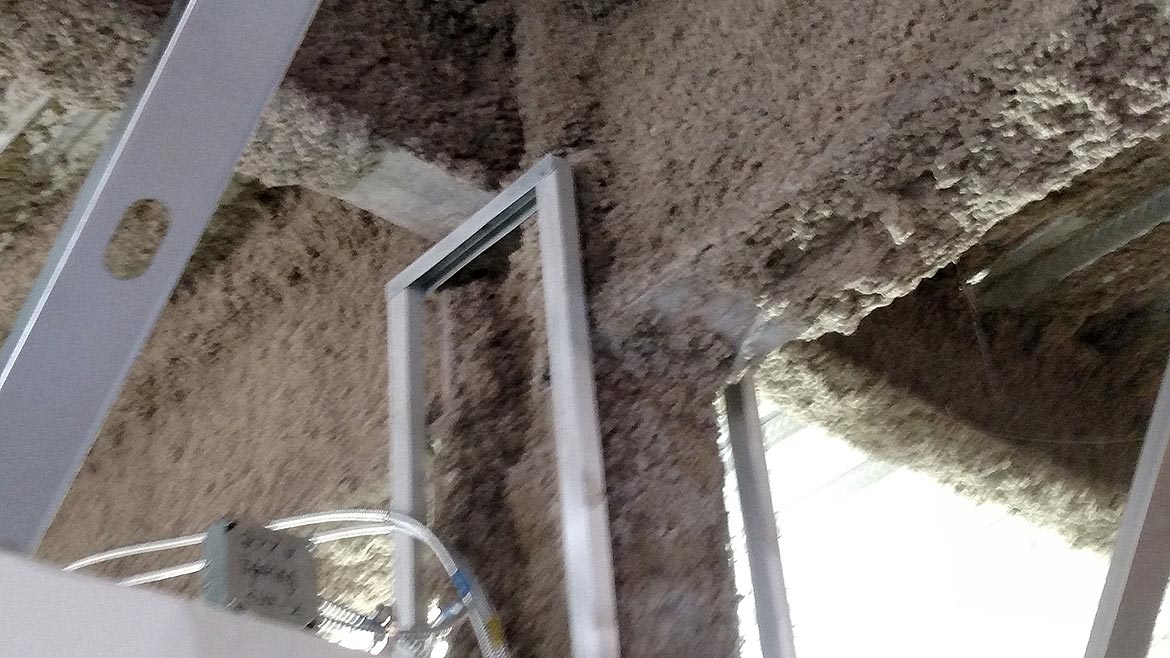
WC0322-FEAT-Fireproofing-p1FT-poorly-installed-electric-cable-damaging-the-fireproofing.IMG_20150415_104940481-(1).jpg
March 18, 2022

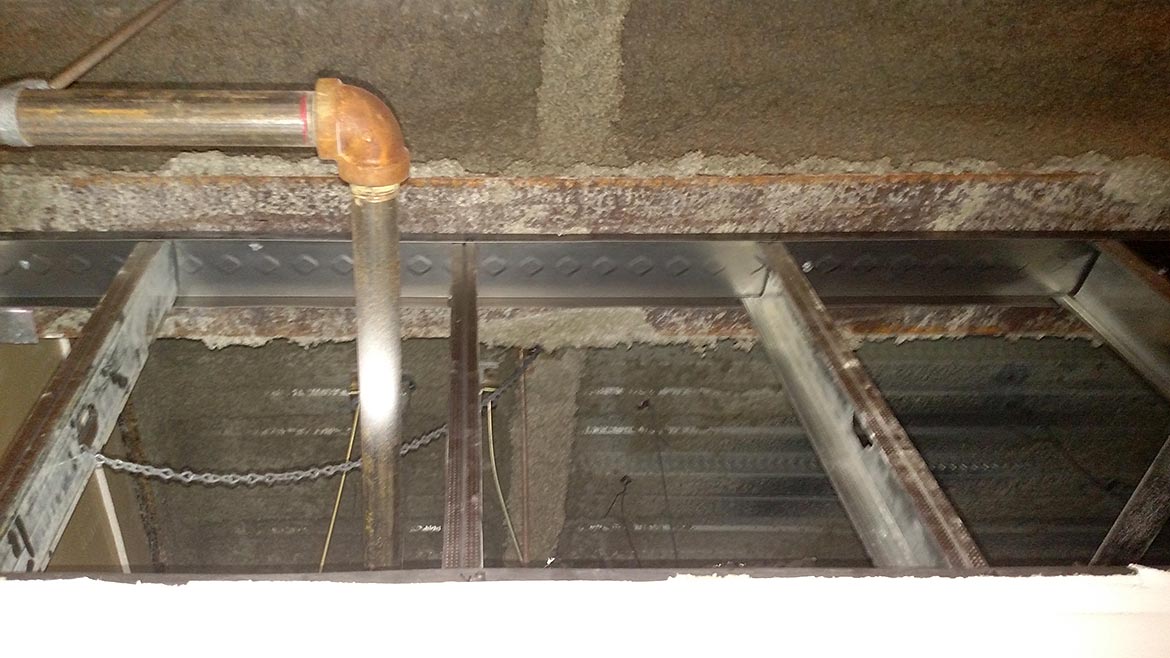
Plumbers, electricians, HVAC, drywallers—they all need to hang from, drill through, or attach to, the fireproofed protected structure in a commercial building. The damage to the fireproofing may be a necessary evil for these trades to do their job, but fireproofing was designed to maintain the complete structural integrity of a building; so what happens when it is disturbed, removed or otherwise compromised?

It really doesn’t matter “who” or “how” the fireproofing was damaged, it just needs to be fixed. Period. Let me repeat that. The fireproofing needs to be fixed. Any damage to the fireproofing creates a life safety issue. It is imperative to maintain the fireproofing to maintain the hourly rating and for the integrity of the building and more importantly, its inhabitants. Damaged fireproofing is also a cost issue. It is not going to repair itself and any repair to it will create a cost. The question quickly becomes about who’s going to pay for it. Damaged fireproofing can also become a scheduling issue. Just try to get the Certificate of Occupancy with damaged fireproofing.  
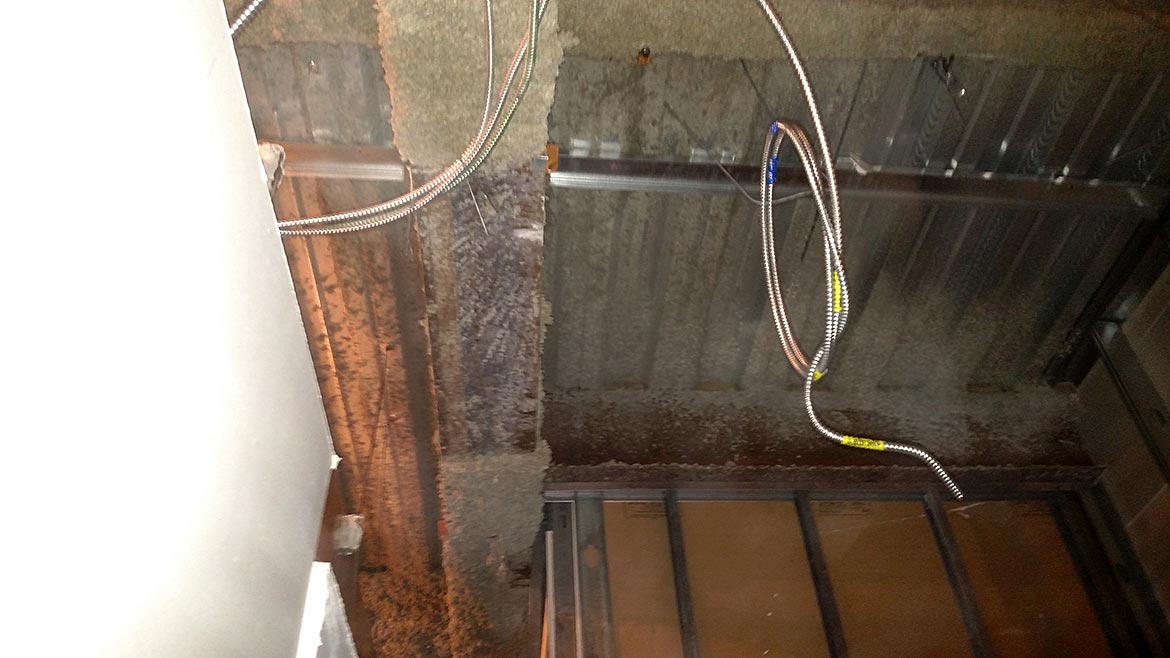
WC0322-FEAT-Fireproofing-p5-scrapped-off-fireproofing.IMG_20150415_105448900.jpg

WC0322-FEAT-Fireproofing-p4-shows-fireproofing-scraped-off-for-metal-studding-work.IMG_20150415_105138398.jpg

Implications of Compromised Fireproofing

When a building fire occurs, heat from the fire will raise the temperature of any exposed steel (e.g. including structures that the fireproofing has been removed or damaged) from room temperature to approximately 1,500 to 1,800 degrees Fahrenheit in a relatively short period of time. At approximately 1,100 degrees Fahrenheit steel loses about 65 percent of its strength. Failure can occur when only a portion of that structural member reaches those temperatures. This is the primary argument as to why the fireproofing must remain intact or be repaired to its original design performance.

Fireproofing, aka spray applied fire resistant material, is applied to rigid structural elements (beams, columns, decks, etc.) in a building; according to predetermined code, specifications, and other requirements usually specific to that job. These requirements include determining the hourly rating of fireproofing of that structural member, as well as type and use of construction.

The SFRM thermally insulates those structural elements to keep them at or below critical temperatures during fire conditions. Even though those steel elements technically may not burn; they will lose significant amount in terms of their strength, under the oppressive temperatures generated from a fire—about 60 percent. Once that steel loses its tensile strength, catastrophe can happen. Intact and properly installed fireproofing also affords crucial time for the first responders to get in and to do their job; not to mention providing time for the occupants to get out of the building.

The second issue is cost. The trade contractor might rightfully argue that he only disturbed what was necessary, while the project management might argue that if you knock it off, you put it back on. Avoid the argument and get the patch and repair issues identified as early as possible in the process in order to adjust allowances, establish T&M rates, back-charge procedures, etc. It is much, much easier to resolve a $1,000 problem than a $10,000 problem. Costs should always be a consideration.

Finally, the issue of scheduling. Incorporate proper timing and scheduling sequences of the trades to allow the fireproofing to be repaired before the structure is sealed up. If there is damaged fireproofing, ignoring the issue will not make it go away. At some point it will raise its ugly head, most likely in a pressure situation (e.g. a grand opening), the first day of school or via a third party inspection. An already complicated and technically compliant situation, will now be further complicated with a cost distribution argument, and we now add time as a critical element.
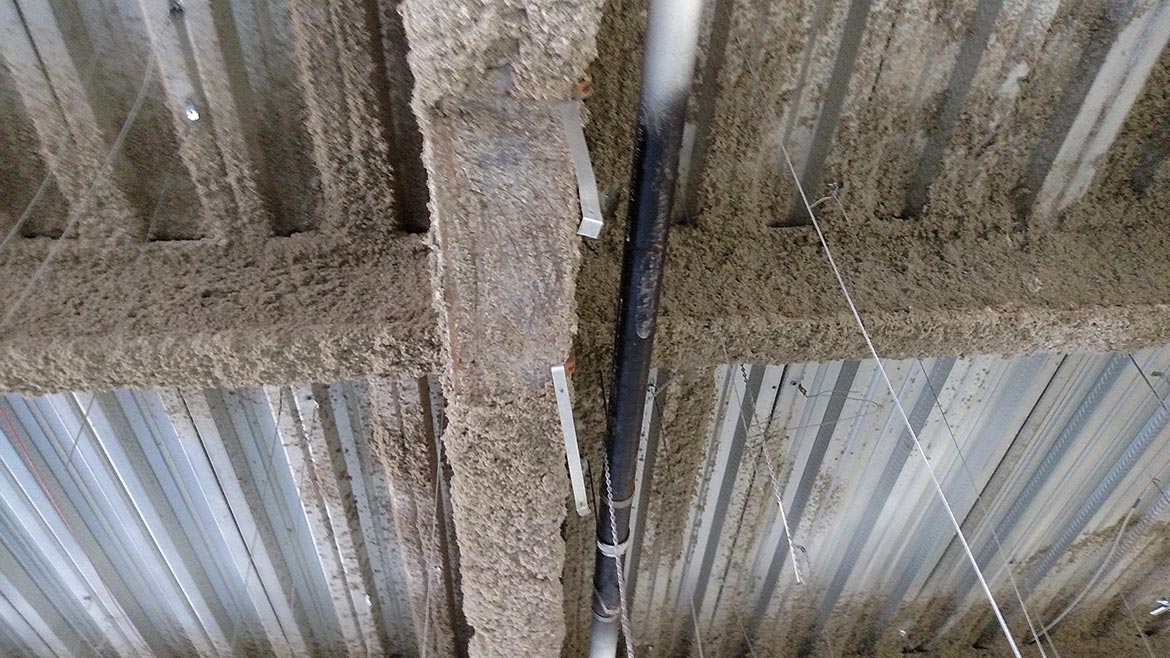
WC0322-FEAT-Fireproofing-p2-shows-fireproofing-scraped-off-for-clips.IMG_20150415_105034860.jpg

WC0322-FEAT-Fireproofing-p3-track-installed-damaging-fireproofing.IMG_20150415_105422303.jpg

What is Fireproofing Designed For?

Without intact and undisturbed passive fire protection an ominous chain of events begin to achieve their destructive potential. A fire ignites, the steel heats up, loses it strength, structural stability wanes, active systems fail, resulting in greater fire risk to all.

Fireproofing is not designed to prevent the spread of a fire as much as it is designed to protect the structure of the building. Protecting the structural integrity of the building is critical, not only to minimize the loss of life and reduce the threat of collapse, but to provide the stability that all other systems, specifically active systems, require to function properly.

To be as clear as possible, by providing this crucial fire protection there are several positive outcomes by allowing these fire resistive materials to work:

  1. The occupants have more time to get out of the structure.
  2. First responders have more time to enter the structure and in a safer environment.
  3. Active systems (alarms, sprinklers, etc.) will not be compromised and will remain functional to perform their fire safety functions.
  4. The structure itself might be saved which reduces the potential for legal issues having to do with liability for loss of life and reduced construction costs.

However, if the structural stability of a building cannot be maintained, a downward spiral begins. In fact, all of the benefits mentioned above will turn from a positive into a negative.

When passive fire protection accomplishes its goal of structural stability, then it also accomplishes the following goals (which are supported by codes, material manufacturer’s guidelines, as well as local building and fire officials):

  • Allowing more time for the buildings occupants to leave the structure safely;
  • Allowing first responders more time to enter the structure and in a safer environment;
  • Reducing the potential for liability damage, legal liabilities, loss of life, and reduced reconstruction costs;
  • Reduce potential property damage, and;
  • Increase property values.


Conclusion

The ultimate goal of SFRM is to provide structural stability such that other systems, sprinkler, detection or communications will work. So the next time you ask, “Why do I have to fix the fireproofing, I’ve got sprinklers and fire alarms?” there should be more questions. If the structure fails, the sprinklers and fire alarms fail as well. Just fix the fireproofing.  

KEYWORDS: commercial buildings drywall fire resistance HVAC sustainability

Share This Story

Looking for a reprint of this article?
From high-res PDFs to custom plaques, order your copy today!

Wc0919 ft winter p5 author tim vellrath

Tim Vellrath has managed a fireproofing contracting business for nearly 40 years. He holds several patents and is the author of the “Handbook of Principles and Practices of Spray Applied Fire Resistive Materials” and accompanying workbook.

Recommended Content

JOIN TODAY
To unlock your recommendations.

Already have an account? Sign In

  • Abercrombie & Fitch

    EIFS in 2026: How Specialty Finishes Are Redefining Exterior Wall Systems

    As building codes, owner expectations, and design demands...
    Stucco/EIFS
    By: Regi Mendoza
  • proper air and vapor control

    From Energy Efficiency to Moisture Management: Why Air and Vapor Control Matter

    How proper air and vapor control within building...
    Building Envelope
    By: Benjamin Meyer AIA, LEED AP
  • Linear Metal Ceiling Beam Baffles

    Top 25 Ceiling Contractors of 2026

    Suspended ceilings demand precision, code compliance and...
    Ceilings
    By: Tanja Kern and John Wyatt
You must login or register in order to post a comment.

Report Abusive Comment

Manage My Account
  • eMagazine Subscription
  • Newsletters
  • Online Registration
  • Manage My Preferences
  • Subscription Customer Service

More Videos

Sponsored Content

Sponsored Content is a special paid section where industry companies provide high quality, objective, non-commercial content around topics of interest to the Walls & Ceilings audience. All Sponsored Content is supplied by the advertising company and any opinions expressed in this article are those of the author and not necessarily reflect the views of Walls & Ceilings or its parent company, BNP Media. Interested in participating in our Sponsored Content section? Contact your local rep!

close
  • medical professionals moving a patient on a stretcher through the halls of a medical building
    Sponsored byNational Gypsum Company

    What Does High Performance Mean When It Comes To Gypsum Boards?

Popular Stories

drywall contractor sanding ceiling

D.C. Drywall Contractors to Pay $302K in Worker Case

skyscraper

NYC Tower Failure Offers Warning for Wall and Ceiling Contractors

A compilation of interior design images and an American Flag

A History of Wall and Ceiling Systems in the U.S.

Ford Drywall crew at a jobsite using Dusty's robotic product

How Ford Drywall & Stucco Reduces Risk with Dusty

Events

January 1, 2030

Webinar Sponsorship Information

For webinar sponsorship information, visit www.bnpevents.com/webinars or email webinars@bnpmedia.com.

See our full library of webinars

View All Submit An Event

Products

2026 National Painting Cost Estimator

2026 National Painting Cost Estimator

See More Products

Related Articles

  • Winter is Coming

    How to Handle Fireproofing in Cold Weather

    See More
  • A ceiling coated with Sprayed Fire-Resistive Material

    Fireproofing - It’s Not Just Materials

    See More
  • WC0621-FT2-Vellrath-p1-firebackground.jpg

    Thermal Short Circuits

    See More

Related Products

See More Products
  • building codes illustated.jpg

    Building Codes Illustrated: A Guide to Understanding the 2021 International Building Code, 7th Edition

  • Lean Builder book cover - front.jpg

    The Lean Builder

See More Products

Events

View AllSubmit An Event
  • November 2, 2026

    FCIA Firestop Industry Conference & Trade Show

    FIC ’26, the FCIA Firestop Industry Conference & Trade Show, is the leading educational firestop conference in the world. The event brings together Specialty Firestop Installation Contractors, Special Inspection Agency personnel, AHJs, Manufacturers, and industry leaders for three collaborative days focused on educating, developing, and improving the firestop industry.
  • June 24, 2026

    The Bright Side & Benefits of Designing with Integrated Lighting

    Credits 1 AIA LU/HSW; 0.1 ICC CEU On-Demand This course will explore the pivotal role architects and lighting design play in creating safer, more sustainable spaces. Learn how to avoid common lighting mistakes and make informed decisions that create the best visual environment for occupants. 
View AllSubmit An Event
×

Connect with the industry’s leading resource for unparalleled insights and education.

Join thousands of industry professionals today. Shouldn’t you know what they know?

JOIN NOW
  • RESOURCES
    • Advertise
    • Contact Us
    • Directories
    • Store
    • Want More
  • SIGN UP TODAY
    • Create Account
    • eMagazine
    • Newsletters
    • Customer Service
    • Manage Preferences
  • SERVICES
    • Marketing Services
    • Reprints
    • Market Research
    • List Rental
    • Survey/Respondent Access
  • STAY CONNECTED
    • LinkedIn
    • Facebook
    • Instagram
    • YouTube
    • X
  • PRIVACY
    • PRIVACY POLICY
    • TERMS & CONDITIONS
    • DO NOT SELL MY PERSONAL INFORMATION
    • PRIVACY REQUEST
    • ACCESSIBILITY

Copyright ©2026. All Rights Reserved BNP Media, Inc. and BNP Media II, LLC.

Design, CMS, Hosting & Web Development :: ePublishing