Stucco as a Versatile System
AN OVERVIEW OF STUCCO SYSTEMS THAT BREAK DOWN THE VARIOUS APPLICATIONS.

Traditional Portland cement plaster, commonly referred to as stucco, is a time-tested exterior finish consisting of Portland cement, lime and sand, which forms a workable cementitious based cladding. Portland cement is the same material that is the basis for the durable properties of concrete used to build highways, bridges, and skyscrapers and as such, lends its strength and durability to stucco.
Stucco is a very versatile material that can be applied to just about any structure, with just about any sheathing, and can accommodate flat or curved surfaces either externally or internally. It has great appeal as a result of its versatility with respect to color and texture options and requires very little maintenance because of its strength, impact resistance, fire-resistance, and color-retentiveness. Moreover, stucco is breathable or permeable since it easily transmits moisture, making it resistant to rot and fungus which as a result, can be used in all wet, dry, hot or cold climates.
Exterior insulation and finish system is an exterior wall cladding that utilizes rigid insulation boards on the exterior of a wall’s sheathing which can provide a plaster-like appearance along with other specialty finish options. EIFS was developed in West Germany in the 1960s and introduced in the United States in the 1970s. The system consisted of expanded polystyrene (bead board) attached adhesively to the sheathing and covered with a lamina composed of a modified cement base coat with woven glass fiber reinforcement and a textured, colored finish coat. Over the years, variations of this system have been developed.
EIFS is available in two basic types: a barrier wall system or a drainage wall system. Barrier EIFS wall systems rely primarily on the base coat portion of the exterior skin to resist water penetration. Barrier EIFS was developed for masonry substrates and is still the preferred application when insulation and a stucco look are desired on masonry walls, even by the Stucco Manufacturers Association. All other components of the exterior wall must either be barrier type systems or be properly sealed and flashed to prevent water from migrating behind the EIFS and into the underlying walls or interiors.

Drainage EIFS systems are preferred over cavity walls as they are installed over a weather barrier behind the insulation that acts as a secondary drainage plane. The weather barrier must be properly flashed and coordinated with all other portions of the exterior wall to prevent water from migrating into the underlying walls or interiors.
The merits of one system over the other is not the purpose of this writing. The purpose is to point out that both systems exist and contractors should use that to their advantage against the other cladding options. On occasion, installations that are defective or questionable can be attributed to any number of reasons: critical details, curing, procedure, or a lack of understanding the correct sequencing of events during the installation.
Although there are many differences between the two, there are many similarities. Generally, EIFS and stucco are used most in commercial, residential or institutional construction and most, if not all wall system companies offer both claddings. Most importantly however, both require a certain degree of training and expertise so that installation and performance issues can be avoided over the lives of these systems.
Another major similarity in looking at the two systems is that the trade that installs these systems are the same. Wall system companies with properly trained installers can install either system correctly, efficiently and profitably. No one system is perfect for all applications.
Proper training on the various systems is critical for the ongoing success of either of these systems and the trade that installs the system. The exterior EIFS, stucco (plaster) systems and the exterior specialty options they provide, along with continuous insulation they offer, are only going to continue to grow. A key to that growth is getting more people trained on how these systems can be installed correctly, efficiently and profitably. Contractors educated and skilled on both systems are only helping themselves.
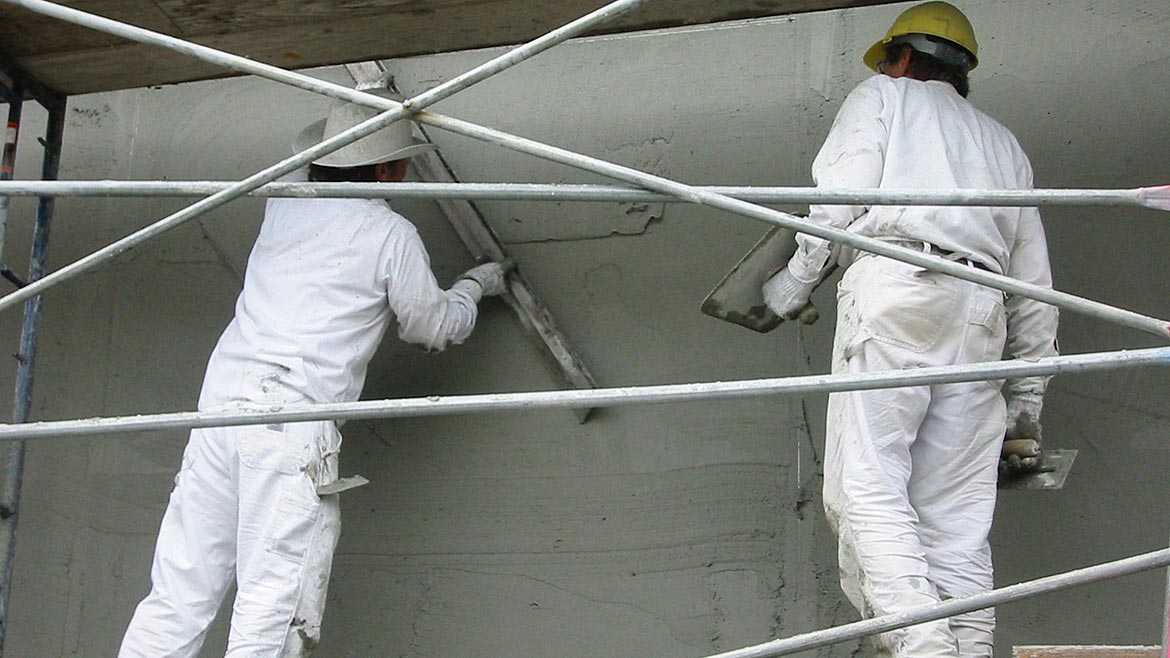
Across the United States and Canada are various walls and ceilings organizations. These organizations are a good starting point to find out what training is available or what else is needed to be a successful installer/craftsman of wall systems. Training covers the systems, application procedures, the function of the various tools involved, along with a knowledge of how the systems are designed to work. Just as important is the ability to head off potential failures and documentation to protect yourself.
Names of local/regional walls and ceilings organizations are AWCI, SMA, NWCB, WACA, WWCCA, TLPCA, FLAPB, EIMA and FWCCA. Each of these organizations are valuable resources for the EIFS and stucco wall systems industry and understand building codes, installation standards and regional best practices.
AWCI has multiple programs including: EIFS—Doing it Right, and Stucco—Doing it Right:
There are two pre-qualifications for acceptance. Those who meet the following criteria may apply for the EIFS Mechanics’ category:
- Minimum of one year of application experience installing EIFS in the field or; completion of the EIFS instruction portion of a qualified plastering apprenticeship program. Stucco Manufacturers Association has an online training program.
- Ability to read and understand English. (It is preferred that participants also have the ability to read blueprints.)

Lathers and Plasterers Course(s) & Test
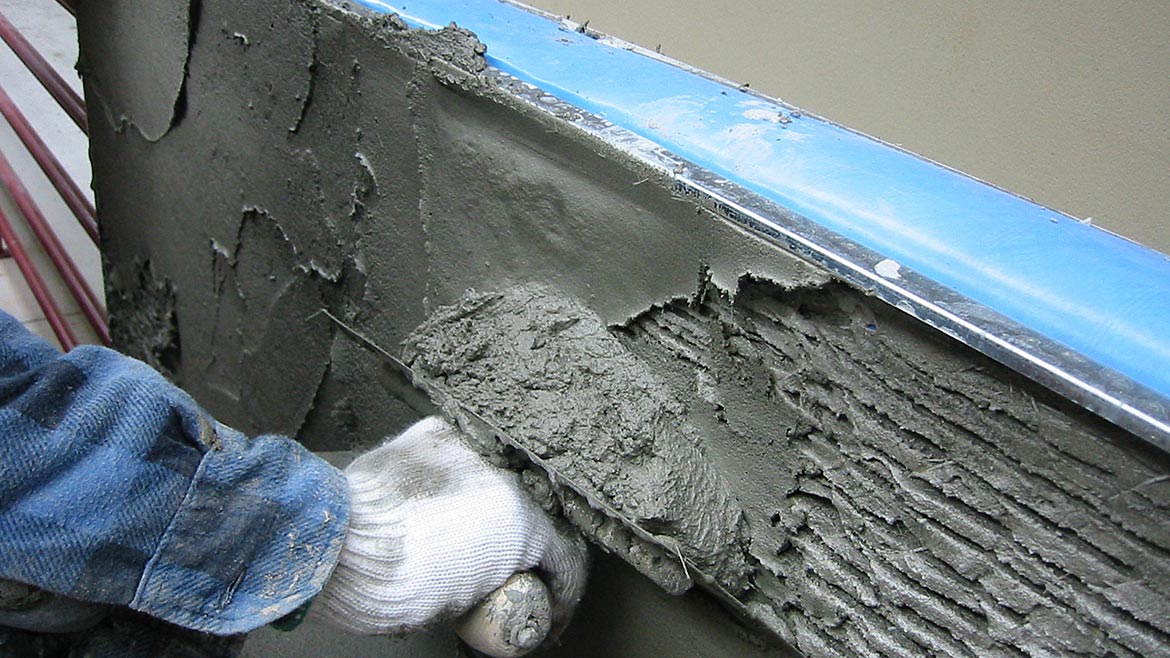
This is a set of knowledge-based courses, including videos of machine and hand tool application. While codes and standards are an important part of trade knowledge, most experts agree understanding the “why” is critical to a successful stucco installation. It is the comprehension of why something works or fails that makes your worker more knowledgeable, adaptable and valuable to your firm. Lathing and plastering are not only skilled trades, but time honored, and the knowledge of the why something works is a big part of what makes stucco work or fail. The SMA Stucco Training Modules are free to view. Testing is intended to verify the person has a comprehension of tools, methods and can also help identify potential issues. The program clearly instructs the worker; they should notify their supervisor of issues of concern and then do as directed by their contractor. There is a Lath test, a Plaster test or a Lath/Plaster combined test.

Supervisor’s Course & Test
The SMA program offers a Supervisors class for those going to the next level. This program includes a Supervisor Manual on leadership, estimating, building science, code, and standards related to lath and plastering. This is helpful to prevent litigation issues.
The SMA recognizes others in the industry may want to verify their comprehension of stucco knowledge.
Certification is included with the testing cost for either course. The SMA has created classifications that will be displayed on the front of the card.
Above are just two examples of the various trade organizations that understand both stucco and EIFS and the correct installation of these wall systems.
Walls & Ceilings readers understand the importance of proper training and knowledge of the systems and have the experience to address issues as it pertains to their business. What they may not know is the various programs offered as continuing or additional education that exists currently in our profession.
No matter how long you have been in the industry, you never know everything. The industry is also always changing and morphing. Staying on top of those changes can make you a better salesperson, supervisor or contractor. Zig Ziglar was a famous American author on motivating people to achieve their best. His quote is one to carry: “Those that refuse to learn, cannot be helped, those eager to learn cannot be stopped.”
Looking for a reprint of this article?
From high-res PDFs to custom plaques, order your copy today!